UPDATE: The Post reports that Stanley will be heading to Calgary to run their planning department.
Yesterday, Maryland Juice reported that Montgomery County planning director Rollin Stanley has resigned and will take a "much bigger job" in another city. While he was an outspoken and controversial public figure, he had great ideas for the county. And despite claims to the contrary, he created a more open and transparent Planning Department.
Stanley was appointed planning director in 2008, three years after the seat was vacated and the once-vaunted planning department became embroiled in controversy. Having gained a national reputation for his work in Toronto and St. Louis, Stanley was quick to shake things up here. One of his earliest public appearances as planning director was at a breakfast for the Greater Bethesda-Chevy Chase Chamber of Commerce, where he referred to big suburban houses as "the next slums."
In an interview with Bethesda Magazine, Stanley said he'd "never planned on doing suburbs" before coming here. But he took the county's history of progressive planning, going back to the On Wedges & Corridors plan in 1964, and crafted a vision to use its transit corridors and aging commercial centers to accommodate projected population growth.
Allow denser development in the right places, he argued, and raise tax revenues that can pay for public amenities while preserving the suburban neighborhoods so many people like. It's an approach that suburbs around the country are taking, from Overland Park, Kansas to Bellevue, Washington, and even right in our own backyard, in Arlington and Tysons Corner.
Over the past four years, I've watched Stanley speak to groups ranging from developers to senior citizens; participated in a blogger panel he organized; and reached out to him personally for advice. His ability to make good planning and design relevant to ordinary, politically uninvolved people is why I want to become a planner myself.
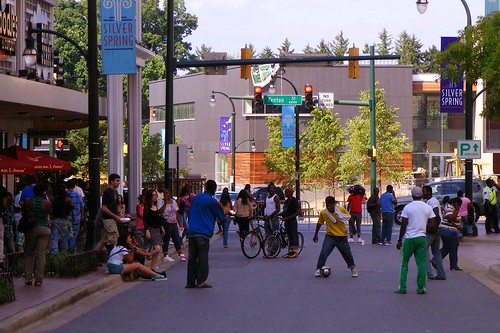
Stanley not only talks about the tax benefits of new development, but the potential to create cool places like downtown Silver Spring, where he and his wife lived. Silver Spring's food carts or the street life on Ellsworth Drive were frequently mentioned on his blog, which along with another blog run by planning staff gave residents an inside look at how the Planning Department worked.
The Planning Department also became more active in the community under Stanley's leadership. His "walkabouts" in various neighborhood allowed him meet with residents in an informal setting. In 2010, the agency held a speaker series where community leaders talked about issues affecting the county. A series of open houses are being held this month to educate residents about a rewrite of the zoning code that'll make it easier for anyone to understand.
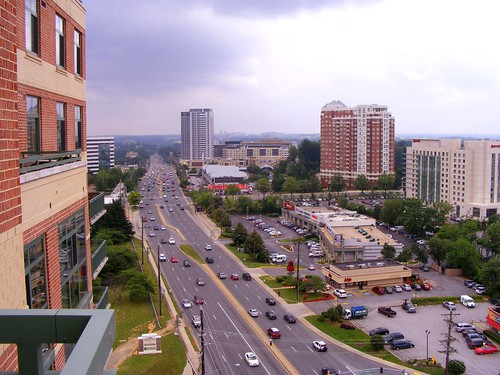
It's this inclusive approach that has earned Stanley support for his initiatives, namely a plan for the redevelopment of White Flint, where the tallest building in Montgomery County recently opened. People who don't normally write their elected officials or place lawn signs in their yard were receptive to his vision of a dense, walkable town center, and with the help of a solid organizing campaign by the White Flint Partnership, they came out in support for it.
While working for Montgomery County Councilmember George Leventhal, I was responsible for answering correspondence about the White Flint plan. Of the roughly 700 e-mails we received, two-thirds were in support, while at the County Council's public hearings for the plan, supporters outnumbered opponents.
Stanley was a polarizing figure, earning the ire of civic associations and even people within his agency who didn't agree with him. Plans for additional development in the Great Seneca Science Corridor and Kensington were met with significant community opposition before eventually being approved. Detractors claimed that he was "dismissive" of residents' concerns and didn't "value opposing opinions." And he occasionally made inappropriate comments, such as referring to an organization that disagreed with him as "rich, white women" that led to calls for him to resign.
Those who demanded Stanley's ouster may be satisfied to see him go, but the ship has already turned. Montgomery County was well on its way to becoming a taller, denser, more diverse place before he came and will continue to do so after he leaves. The question is whether we can find another planning director with the same passion and vision who can keep us moving forward.
Yesterday, Maryland Juice reported that Montgomery County planning director Rollin Stanley has resigned and will take a "much bigger job" in another city. While he was an outspoken and controversial public figure, he had great ideas for the county. And despite claims to the contrary, he created a more open and transparent Planning Department.
Stanley was appointed planning director in 2008, three years after the seat was vacated and the once-vaunted planning department became embroiled in controversy. Having gained a national reputation for his work in Toronto and St. Louis, Stanley was quick to shake things up here. One of his earliest public appearances as planning director was at a breakfast for the Greater Bethesda-Chevy Chase Chamber of Commerce, where he referred to big suburban houses as "the next slums."
In an interview with Bethesda Magazine, Stanley said he'd "never planned on doing suburbs" before coming here. But he took the county's history of progressive planning, going back to the On Wedges & Corridors plan in 1964, and crafted a vision to use its transit corridors and aging commercial centers to accommodate projected population growth.
Allow denser development in the right places, he argued, and raise tax revenues that can pay for public amenities while preserving the suburban neighborhoods so many people like. It's an approach that suburbs around the country are taking, from Overland Park, Kansas to Bellevue, Washington, and even right in our own backyard, in Arlington and Tysons Corner.
Over the past four years, I've watched Stanley speak to groups ranging from developers to senior citizens; participated in a blogger panel he organized; and reached out to him personally for advice. His ability to make good planning and design relevant to ordinary, politically uninvolved people is why I want to become a planner myself.
Stanley not only talks about the tax benefits of new development, but the potential to create cool places like downtown Silver Spring, where he and his wife lived. Silver Spring's food carts or the street life on Ellsworth Drive were frequently mentioned on his blog, which along with another blog run by planning staff gave residents an inside look at how the Planning Department worked.
The Planning Department also became more active in the community under Stanley's leadership. His "walkabouts" in various neighborhood allowed him meet with residents in an informal setting. In 2010, the agency held a speaker series where community leaders talked about issues affecting the county. A series of open houses are being held this month to educate residents about a rewrite of the zoning code that'll make it easier for anyone to understand.
It's this inclusive approach that has earned Stanley support for his initiatives, namely a plan for the redevelopment of White Flint, where the tallest building in Montgomery County recently opened. People who don't normally write their elected officials or place lawn signs in their yard were receptive to his vision of a dense, walkable town center, and with the help of a solid organizing campaign by the White Flint Partnership, they came out in support for it.
While working for Montgomery County Councilmember George Leventhal, I was responsible for answering correspondence about the White Flint plan. Of the roughly 700 e-mails we received, two-thirds were in support, while at the County Council's public hearings for the plan, supporters outnumbered opponents.
Stanley was a polarizing figure, earning the ire of civic associations and even people within his agency who didn't agree with him. Plans for additional development in the Great Seneca Science Corridor and Kensington were met with significant community opposition before eventually being approved. Detractors claimed that he was "dismissive" of residents' concerns and didn't "value opposing opinions." And he occasionally made inappropriate comments, such as referring to an organization that disagreed with him as "rich, white women" that led to calls for him to resign.
Those who demanded Stanley's ouster may be satisfied to see him go, but the ship has already turned. Montgomery County was well on its way to becoming a taller, denser, more diverse place before he came and will continue to do so after he leaves. The question is whether we can find another planning director with the same passion and vision who can keep us moving forward.