Thursday, March 8, 2012

remembering phantasmagoria

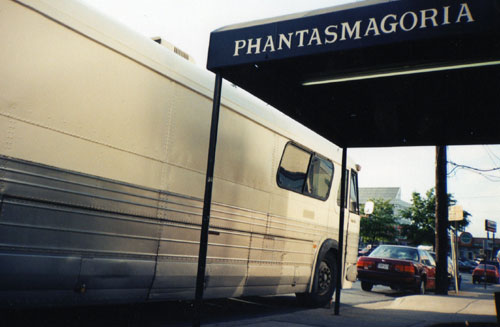
Phantasmagoria, Wheaton, Md. (1995)
Phantasmagoria in 1995. Photo from Adventures Under the Porcupine Tree.

I was very excited to stumble upon this photo of Phantasmagoria, a record store-turned-punk club on Elkin Street in Wheaton that operated during the 1990's long before The Fillmore came to East County. Back in 2010, guest blogger Dave Murphy wrote about his experiences growing up in Wheaton and going to Phantasmagoria as a high school student:

In 1996, Phantasmagoria moved to Elkin Street, next to one of my other favorite Wheaton venues, Legends Pool Hall. "Phantaz", as we called it, added a grill and a stage at their new venue, and all of the sudden Elkin Street boasted two hip venues. The tight streets and nighttime activity created a sort of feral urbanism, an area to walk around and feel natural despite the fact that I was trying to distract myself from the continuing decay of community and the arts in suburbia.

Both Phantaz and Legends were places shady enough to be considered cool, but safe enough that my mother would reluctantly approve of me spending Friday nights shooting billiards and going to punk shows. Both were independent businesses, and both were affordable enough for crews of lower-middle class outcasts to seek refuge. In Legends, you were most likely to see Central American or Southeast Asian immigrants on the billiards tables or service industry types at the bar; meanwhile, Phantasmagoria attracted every kind of punk, indie rocker, metalhead, ska fan, or geek rocker you can imagine.

I never got into any trouble there, save for coming home smelling like cigarettes (which I don't smoke now, and certainly wasn't then). Nonetheless, I felt welcome and at home in the shadows and back alleys of Wheaton, not in Wheaton Plaza or fast food joints where my more clean-cut classmates might be found bubbling around after school.

Phantasmagoria closed in 2001 and was subsequently replaced by the Gilchrist Center for Cultural Diversity, which "provides activities and services to the County's diverse community and functions as a central point of contact for residents to County and other community services." I was 13 at the time, a little too young to have been able to go to Phantasmagoria, though I remember seeing it when I was younger and being freaked out by the people who hung around outside. I wish I'd had a chance to hang out there.

A local music scene is one of the things that make our community great. Phantasmagoria may be gone, but I hope other venues like it will emerge to take its place.

Tuesday, March 6, 2012

in defense of "green day" urbanism

People sometimes complain that "New Urbanist" or "town center" developments like Downtown Silver Spring are fake and sterile. But the way I see it, these projects are to urbanism as Green Day is to punk rock. They may not be "authentic," but if done well, they can get people to seek out the "real stuff" later on.

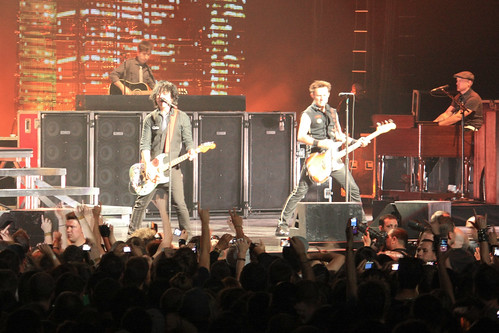
Green Day concert in Montreal
Green Day performing in Montréal. Photo from Jonathan Patenaude on Flickr with a Creative Commons license.

That's what happened to me. When I was thirteen, I became increasingly curious about the outside world but had no real means to explore it. Then two things happened that would change my life.

The first is that I got a copy of Green Day's International Superhits!. Between my parents, who listened to adult contemporary, and my friends who were getting into musical theatre, I was anxious to hear music I could actually relate to. And Green Day was pretty easy to find: on the radio, on television, and in the halls of Blake High School, on t-shirts and patches sewn to jean jackets.

Their songs were fast and catchy, though as a preacher's kid, I was initially horrified by the foul language. But I'd spent plenty of mindlessly dull afternoons like the ones Billie Joe Armstrong described in "Longview," and was relieved to know someone else felt the same way.

The second is that my friend had a birthday party at the Washingtonian Center, a "lifestyle center" in Gaithersburg that I'd never been to previously. Before that evening, walking felt like a punishment, something I did on those "Longview" afternoons when I didn't have a ride to any place more interesting. On those days, I'd walk 45 minutes to the shopping center closest to my parents' house, down streets with look-alike 1950's ranch houses and all while not seeing another person. It was boring, but slightly better than being at home.

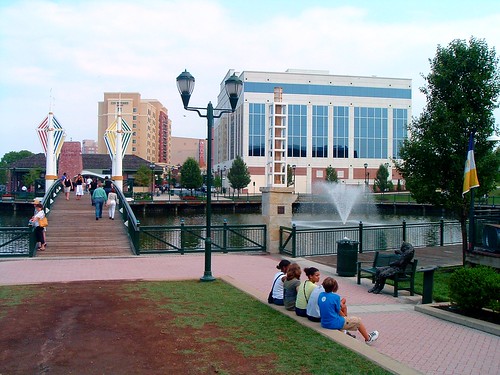
Washingtonian Center Lake; The Kid In The Blue Wouldn't Stop Staring At Me
Washingtonian Center in 2006.

At the Washingtonian Center, walking suddenly became something fun. We could walk from the movies to an artificial lake, then look in store windows on our way to dinner. And we could do all of this while being around and looking at other people. Not only was it better than sitting at home alone, but it was more fun than going to the mall.

I didn't question Washingtonian Center's authenticity at first, perhaps because I couldn't yet tell the difference between it and a traditional downtown. But I definitely wondered why Green Day called themselves a "punk band," which didn't seem to describe a group who played stadiums. Punks, I imagined, were more likely found in places like Phantasmagoria, the grungy and now-closed punk club in Wheaton.

But both of these experiences served as a sort of gateway to more "legitimate" pursuits. It's because of Green Day that I made friends with similar taste in music who would later introduce me to "actual" punk bands like Fugazi or invite me to see their band play shows in punk houses. (The webcomic Nothing Nice to Say jokes that Green Day fans get into real punk out of embarrassment for liking Green Day.)

And it's because of Washingtonian Center that I began to explore downtown Silver Spring before it became a new "town center" in its own right, and taking Metro into the District to wander around there. I've always been interested in architecture, but it's trips to places like Washingtonian Center which got me excited in the spaces between the buildings, which is why I'm currently in school for urban planning.

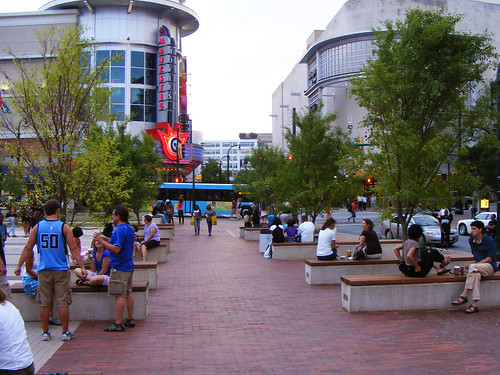
Looking Back Towards Ellsworth
People may call downtown Silver Spring "fake," but it gets people excited about urban places.

Much as I wouldn't have gotten into real punk if I hadn't listened to Green Day, I wouldn't be so excited about walking down real city streets had I not walked down a fake city street first. So for that reason, I'm not bothered when a new development is compared to a small town or an Italian piazza. Some of these places are like the Good Charlotte of urbanism, unable to be even a good fake downtown.

But like a good punk song that can teach you to see yourself and your world differently, I'm convinced that a walk down a good urban street can do the same, whether it's in a city or a suburb, old or new.

For more on the topic of punk rock and New Urbanism, check out this post from Scott Doyon comparing the two.

Monday, March 5, 2012

guest blog: why maryland desperately needs a gas tax

Today's post comes from Scott Goldberg, Bethesda resident and former candidate for state delegate, on why Maryland needs a gas tax to pay for the state's pressing transportation needs. For more of Goldberg's thoughts on transportation from the Purple Line to energy independence, check out his 2010 interview with Greater Greater Washington.

And as always,
JUTP is looking for guest posts. If you've got something to say, feel free to e-mail me at justupthepike at gmail dot com.

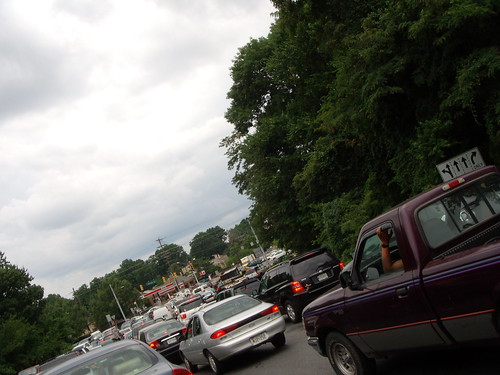
Super Traffic


If you’ve been outside of your home in the last decade you know that our roads, buses and trains are at their breaking point. Whether it’s sitting in traffic on the beltway (DC or Baltimore, both work for our purposes) or watching a full Metro train pass you by, you know something needs to be done. This may come as a shock but the ICC hasn’t solved all of our transportation problems. Maybe it’s time to actually have an adult conversation and get serious before something crumbles and people die.

Let’s discuss the wonderful world of Maryland transportation. Maryland pays for transportation projects in a variety of ways. Sometimes we use bonds. The Maryland Transportation Authority sells bonds and uses GARVEE bonds (look it up). Sometimes we pay cash. The Maryland General Fund or Transportation Trust Fund (TTF) are huge sources of money. And if Uncle Sam is feeling generous, the federal treasury helps foot the bill too. It doesn’t hurt that Marylanders send 18.4 cents per gallon of gas straight down 16th Street to the Treasury Department.

I’d like to focus on the Transportation Trust Fund for the time being because size matters and the TTF is the biggest source of revenue.

What is the Transportation Trust Fund? It is a “dedicated” fund started in 1971 that finances the Maryland Department of Transportation (MDOT). The TTF gets its money from the gas tax, excise taxes, motor vehicle fees (registrations, licenses and other fees), federal aid, corporate income taxes, operating revenues (e.g., transit fares, port fees, airport fees), and bond proceeds. MDOT uses the money to maintain and operate roads, bridges, trains, airports, sea ports, and buses. Pretty straightforward.

So why does the TTF need additional revenues? Easy. Two main reasons: 1) the fund’s primary source of revenue, the gas tax, is the same as it was in 1992, 23.5 cents, and 2) since 2003, the state stopped giving counties and localities their portion of the funds and paid other bills with the money instead. Reason 2 has been characterized as transfers, reallocations, adjustments, raiding or even stealing. At the end of the day, our government took about $1 billion it was supposed to spend on roads, bridges and trains, and spent it on other stuff. Oops.

Fast forward to right now and we’ve got more people to move around and less trains, buses and roads to do it. Oh, and our bank account is running pretty low. Enter the gas tax. Last fiscal year the gas tax brought in $746 million. Governor O’Malley proposed the proposal of the Blue Ribbon Commission on Maryland Transportation Funding that nets the most amount of money which would be to apply the 6% sales tax to the retail price of fuel. That brings us about $600 million. It’ll cost someone who drives a lot about $150 per year and will probably save them more than that in wear and tear. It pays all the back money we owe to the counties and Baltimore City in a year and a half and gives us the spending power to not only make sure bridges don’t collapse, but construct a modern transportation system.

It is big, it is bold, it is decisive, it could bring Maryland back into the game with the proverbial “one swing of the bat.” You should absolutely not support it . . . yet.

Imagine walking into a restaurant and the host asks you to pay $25 per person. The catch is that there is no guarantee that you’ll be seated, get food or be allowed to stay. That’s what Governor O’Malley is asking you with the gas tax. He is asking you to pay more but not assuring you that the money will go directly towards transportation projects or would ever be spent on infrastructure. The Blue Ribbon Commission nailed it on the head in their first recommendation to restore trust to the Trust Fund: enact laws that prevent money from being taken out of the TTF for non-transportation reasons ever again.

If he can guarantee that, let’s go back to the restaurant analogy and ask to see the menu. Can we have the Purple Line and Rapid Transit Vehicles in Montgomery County, Red Line in Baltimore, Corridor Cities Transitway to Frederick, smarter traffic lights, bike lanes, and an easier trip to Ocean City for dessert? After a meal like that, I would be ready to pay the bill.

We should make our Governor make the case of why we need to pay more at the pump. Marylanders need to know what transit projects are going to be engineered and built, which roads will be paved, and where train tracks are going to be laid. We’re being asked to take money from our bank account and put it in Maryland’s bank account and that’s OK. I just want to make sure that my money and your money will result in all of us spending less time getting to and from work and more time with our families or if you don’t like your family, somewhere else you enjoy being.

When our Governor speaks up and tells us why we need to pay more, what we’ll specifically be paying for and how much it will cost us, then we should support him because by supporting his plan, we’ll really be helping ourselves.

Scott Goldberg

Friday, March 2, 2012

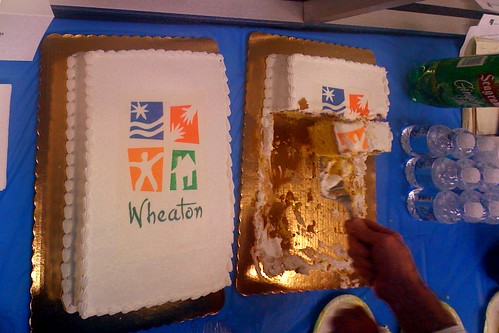
what's up the pike: not enough cake for wheaton?

Wheaton Cake
I feel guilty just throwing together a links post, particularly one of links about me. But this has been a trying few months - since January, I've gotten sick twice, my computer's hard drive failed, I just finished mid-terms and tonight, just so God can prove He still exists, my wireless router died. And tomorrow I'm going out of town for a week for a school trip. So, you know, I think a links post is warranted now.

Anyway:

- I'm really proud to be from Maryland after yesterday, and I hope it all doesn't come undone in November.

- I think County Executive Ike Leggett is doing a spectacular job trying to pit Wheaton and Bethesda against each other over what is admittedly a limited pool of county funds. And I generally agree with East County resident Cavan Wilk, who argues that we can give Bethesda a new Metro station entrance AND provide funds for redeveloping Wheaton, provided our priorities are in order. Hopefully, our county councilmembers feel the same way.

I was particularly intrigued by this post from Bethesda resident Robert Dyer, who says Wheaton is "doing just fine" and, thus, doesn't need any government help at all:

With pressing needs addressed, Wheaton is doing just fine. Visit sometime, and you'll find that - by golly - they do have good restaurants. Some of the best chicken can be ordered in Wheaton, and many critics have said the best dim sum is at Wheaton Plaza's Hollywood East Cafe.

Change will come to Wheaton, but let the market bring it, parcel by parcel.

Dyer might be correct. After all, developer JBG just got approval to build 1,500 new homes and 90,000 square feet of retail (that's about 1.5 times the size of a Giant supermarket) in Glenmont with no public funding, notes the Gazette. How can this happen when Ike Leggett insists we have to pay people to develop in Wheaton, which would arguably be a more attractive place to live/work/shop and, thus, a more profitable area to build? Or is it just a matter of reducing barriers that have prevented development from occuring there in the past?

If Montgomery County can find $40 million to spend on Wheaton, I'm all for it. But I'm not convinced they're going to the right place.

- My post about Takoma Park progressives impeding actual progress has gotten a lot of attention. The city administration wasn't too happy about it. I heard from a few city officials, including Councilmembers Seth Grimes and Tim Male, who wrote a whole post on GGW outlining "progressive" things the City of Takoma Park supports, like the Takoma-Langley Crossroads Sector Plan the MoCo Planning Department is working on, and The New Ave, which I've written about (and positively!) several times in recent years.

Meanwhile, Forbes contributor Josh Barro wrote a whole article about the topic, comparing NIMBY homeowners to an oil cartel:

Takoma’s residents oppose developments that should align with their ideological views because opposition to development is not about ideology at all. Instead, it is a matter of economic self-interest. Incumbent homeowners get together like a cartel and use their political power to prevent the creation of new housing units. This makes housing units more scarce and more expensive, enriching those who already own them. Your local block association might seem friendly, but its members are really no better than OPEC.

Let's be clear: I don't think Takoma Park residents, city employees, or elected officials bear any resemblance to OPEC. I don't want to cause any more trouble than I've already started.

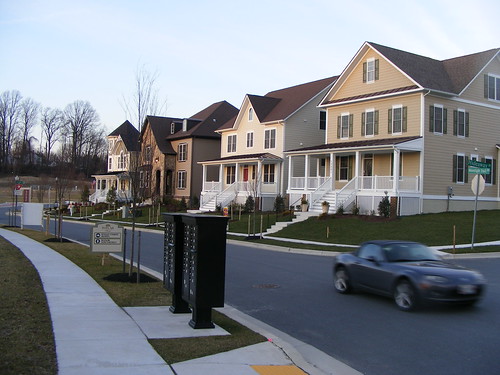
Homes Look Like They Belong in Kentlands


Is this Kentlands? No, this is Poplar Run, the big new planned community going up at the former Indian Spring Country Club in Layhill. I need to write about this one day, now that I've been there.