Showing posts with label housekeeping and random. Show all posts

Wednesday, October 13, 2021

pit bull bans are a housing issue

It’s Pit Bull Awareness Month, which is a time to celebrate this misunderstood (but very common) dog breed and help get them adopted. One barrier to finding these dogs loving homes are breed-specific laws and housing restrictions, which were intended to protect people from unsafe dogs but have long failed to do so.

Aruba (left) and Drizzy (right), two pit bulls who found loving homes. Photos by the author.

Meet my dog Drizzy. My partner and I adopted him last summer. Like many dogs, he can usually be found going for long walks or destroying squeaky balls. We’ve enjoyed him so much that last summer, we fostered another dog named Aruba. She’s an eight-month-old puppy who was found as a stray.

Both Drizzy and Aruba are pit bulls. Drizzy came from a rescue in Virginia, and we own a home in Montgomery County, so there was no issue when we wanted to adopt him. It wasn’t so easy for Aruba. She came from the shelter in Prince George’s County, which has banned pit bulls since 1997. Anyone caught with a dog suspected of being a pit bull can get fined up to $1,000 or even go to jail.

Instead, dogs like her usually end up at other shelters or with groups like Vindicated Pit Bull Rescue, which saved Aruba. In turn, they have to find a potential adopter outside of the county. But that family can’t live in an apartment complex or a homeowner’s association, because they often ban them too. Despite being a puppy with no record of harming anyone, she was treated like a danger because of how she looked.

Friday, February 5, 2021

this black history month, think about the power you wield

When little kids learn about Martin Luther King, Jr., they usually hear a version of this story: when Dr. King was a child, a white friend says they can’t play together anymore because his parents won’t let him play with a Black child. It’s the inciting incident in Dr. King’s story, what inspires him to fight for justice.

Students organized this Black Lives Matter protest in Bethesda last summer. Photo by the author.

King came from a relatively comfortable family. He grew up in a large Victorian house originally built for a white family. Both of his parents went to college, as did he and both of his siblings. His sister was a professor. None of those things could protect him from the whims of a white person defining where, when, how, or even if they would engage with him.

Decades after the Civil Rights movement, segregation and discrimination persist because that power imbalance still exists. This Black History Month, if you’re planning to do a day of service or support a Black-owned business, I encourage you to take it a step further and examine the power structures in your community.

Thursday, July 2, 2020

14 years!

As longtime readers know, I started this blog 14 years ago last Friday, June 26, at the age of 18. I was passionate about this place, but it was a lonely effort. Most of my friends had other things to worry about, and they were tired of me ranting in class or at parties or at shows about the Purple Line.

I wish 18-year-old me could see how much things have changed!

BLM protest at Walter Johnson High School
A socially-distanced protest at Walter Johnson High School in Bethesda, organized by two recent graduates. Photo by the author.
This spring, I've had the chance to meet a number of young people in Montgomery County who are leading the fight for equity and justice in our community, from the MCPS school boundary analysis to over two dozen Black Lives Matter protests that have happened here since May. They live in all parts of the county. They come from a variety of different backgrounds. What unites them is their energy, their persistence, and their willingness to say what needs to be said.

Zoe Tishaev, a graduate of Clarksburg High School, organized a two-hour discussion on exclusionary zoning in Montgomery County called A Legacy of Segregation, where I spoke along with Jane Lyons from the Coalition for Smarter Growth and Planning Board member Partap Verma. You can watch it here:


Last weekend, I had the honor of speaking at a BLM protest at Walter Johnson High School in Bethesda organized by Matt Garfinkel and Nat Tilahun, two MCPS grads who understood the power of making yourself heard right here at home.

These are just two examples, but I'm constantly inspired by the hard work of our student activists - and challenged to push harder for what's right. As grown-ups (am I a grown-up yet?) we would do well to listen to them.

Anyway, here's the text of my speech on Saturday. Here's to 14 years of Just Up The Pike, and here's to 14 more years:


Tuesday, June 9, 2020

thomas hardman (1958-2020)

Thomas outside Dunkin' Donuts in 2008.
Photo by the author.
Thomas Hardman, a longtime Aspen Hill resident, computer programmer, occasional political candidate, and moderator of several local Facebook pages, was found dead in his Gaithersburg apartment over the weekend. An autopsy reports that he had a heart attack. He was 62.


Thomas's friend, civic activist Cary Lamari, reported the news on Facebook last night. Lamari says he asked people if anyone had heard from him since he hadn't posted in several weeks, and filed a missing persons report. Montgomery County police conducted a distress call and found Thomas Sunday night. He was not married, and did not have any children.

From Cary's Facebook page:
Thomas was liked by many people on Facebook and in the Aspen Hill Community, He attended Robert Perry High school and has been a staple in County political discussion for many years. You could always find Thomas at meeting in the Aspen Hill Civic Association meetings and he had a wonderful historical memory of past events and developments in our Community...Thomas was a good and Moral person and will be missed.
Thomas was a big part of the JUTP community as well. Back in the early days of the blog, Thomas was a frequent commenter and a longtime friend of the blog, eagerly offering his thoughts over coffee at Dunkin' Donuts (and it was always Dunkin' Donuts).

From 1980s punk rock to obscure science fiction to Linux to the arcana of Montgomery County, Thomas always had a good anecdote to share and an eagerness to find solutions. According to his personal website, he received a patent in 2008 for an "invention in the field of computing and dataprocessing."


Wednesday, June 26, 2019

we moved to rockville pike and if you're surprised by that, I am too (13 years of JUTP)

Today marks 13 years since I started writing a blog about Silver Spring and East County. And until recently if you'd told me that I would move out of Silver Spring, I wouldn’t have believed you. I grew up there, I moved back there as an adult, I bought a home there, I work there, and I even helped start a neighborhood association there. Now, if you’d told me that my partner and I would move to North Bethesda - well, I definitely wouldn't have believed you.

rockville pike rainbow
Home, for now. All photos by the author.
So last November, we signed a lease for an apartment off Rockville Pike. It’s been a real learning experience! Let’s break it down:


Sunday, May 5, 2019

my uncle raymond

My Uncle Raymond always referred to himself in the third person, as if he was detaching from himself, because he was going to be fine, he wanted to know how you were, if you needed money, if you needed food, how was my mother, how was my brother. Was my brother still in school? Did my brother and I know how proud Uncle Raymond was of us? When we spoke on the phone, before he hung up, he reminded me: Take care of your mother, okay?

Uncle Raymond (center) and my Uncle Dennis fixing my brakes out behind Second Street. Photos by the author.
Uncle Raymond taught me that love comes in a multitude of forms, and sometimes it comes from behind the wheel of a car. He taught me to parallel park after I'd failed my driver's test three times and was convinced I would never, ever drive. He pulled out the cones he kept in his trunk one afternoon in the parking lot of Carter Barron Amphitheatre, and I still hear his voice every time I have my side mirror lined up with the rear of the car next to me, yelling CUT IT CUT IT CUT IT OKAY STOP and yanking the imaginary wheel to the right.

Uncle Raymond was a DC cab driver for 37 years. He knew where to find every broken parking meter, every remaining greasy spoon diner downtown, every shortcut that Waze hadn’t uncovered. DC cab drivers don’t have an equivalent of The Knowledge, but if I wanted directions I called him, and I gave the exact address for where I was going - never the intersection - and Uncle Raymond would tell me how to get there depending on the time and the weather and if they were doing street sweeping that day.


Tuesday, April 16, 2019

before the purple line, silver spring will get this train-chameleon mural

CORRECTION: this story has been updated to reflect the fact that this mural depicts a chameleon, not an iguana; I'm gonna go review my lizard flash cards now

The Purple Line won't open for a few years, but it'll arrive a little sooner in Silver Spring in the form of a new mural that turns the train into...a chameleon. Work on the mural started last week on a blank wall the intersection of Georgia Avenue and Bonifant Street, where Purple Line trains will run once the light rail opens in 2023.

The mural, currently in progress, depicts a train-chameleon hybrid. Photo by the author.

The Silver Spring Urban District, which manages everything from street sweeping to community events in the downtown, commissioned the mural with the Silver Spring Arts and Entertainment District. It held a poll last year for residents to choose from a few different designs, and this train-iguana hybrid won. (Full disclosure: I voted for it.)

The mural fills a block-long blank wall next to the future Purple Line. Photo by the author.

It's an important piece of public art for an intersection that's changed a lot. There used to be another building at the corner, but it was demolished in the 1970s to widen Bonifant Street, revealing the blank wall. In recent years, this stretch of Georgia Avenue has become the heart of Silver Spring nightlife. The Quarry House Tavern, which opened in the 1930s, sits across Georgia, and new venues like Society, Urban Butcher, and Astro Lab have opened nearby. Washington Property Company, which is building a new, 20-story apartment building across Bonifant Street, paid for the mural.

Here's what the mural will look like when it's done. Image from the Silver Spring Urban District.
However, the push for a mural started several years ago from community members. In 2014, local architects Atul Sharma and Mark Schrieber gave a presentation at PechaKucha Night Silver Spring about how underused public spaces could become opportunities for art or community gatherings. One of their proposals was painting a mural on the blank wall. Around the same time, mysterious posters appeared around the then-unfinished Silver Spring Transit Center calling for it to become recreational space.

When it's built, each Purple Line station will also have public artwork on display, but it's cool to see community-led artwork joining it. Hopefully, the train-chameleon will become a well-loved landmark for future riders.

Monday, December 31, 2018

a brief look back at 2018


The week between Christmas and New Year's is one of my favorite times of year, one in which everything quiets down and we can take a moment to reflect on the past year and make plans for the future as well. Or at least, that's the plan, right? This year has been exhilarating and productive and sometimes frustrating, and I'm grateful for the adventures I've had and the great people I've gotten to work with.

However, I am wiped! Here are some of the things I did this year:
My goals for 2019 are simple: there are only so many hours of the day, and I want to spend them with the people I love, projects I'm passionate about, and all while taking care of myself. I know all of you had a big year, and I hope you take care of yourselves in the coming year too! I'll see you in 2019.

Wednesday, September 19, 2018

wheaton's art parade shows how we can reuse vacant suburban spaces

This Sunday, works of art will take over the streets of downtown Wheaton for the Wheaton Art Parade. Now in its second year, the parade is a sign of how communities in Montgomery County are finding new uses for vacant suburban retail spaces.

One of the sculptures in the Art Factory, the former mall beauty school where pieces in the Wheaton Art Parade are stored. All photos by the author.

Earlier this month, I stopped by the Art Factory, a former beauty school behind Wheaton Plaza. Nestled between mannequins and barber’s chairs are giant sculptures, including a rainbow-colored chicken and a robot. A piece called “Narcissus” riffs on Michelangelo’s Creation of Adam by putting a smartphone in Adam’s hand as he takes a selfie.

Dan Thompson, executive director of the Wheaton Art Parade and a retired federal worker, wanted to bring local artists together. “The town doesn’t know the artists that are here,” he says. “Artists don’t know each other. You want to call a meeting with artists? They’re all busy scraping by.”


Tuesday, June 26, 2018

your presence in this room is a radical act (12 years)

Burtonsville Crossing Charrette
East County residents gathered this month at a workshop on the future of Burtonsville Crossing. Photo by the author.
Twelve years ago today I started this blog. Since then, I’ve written over 1,700 blog posts, started Facebook and Twitter pages with a combined following of over 8,500, and met hundreds if not thousands of awesome people in our community. But the accomplishment I’ve been proudest of has been helping to build a network of people promoting positive change in this community, and encouraging others to not only speak up, but take leadership roles as well. Here are just some of the projects that our friends and neighbors in East County are working on this year:


These efforts will help make our communities safer, give people more and more reliable ways to get around, bring new life to our older neighborhoods, and provide crucially-needed housing and economic opportunities for our growing population. I’ve offered my time and advice to these folks, and consider them my friends, but otherwise I can’t take much credit for these efforts.

And that’s the best part! I’m excited that there are so many other leaders in this community, because together we can do so much more. The crucial part about these projects is that they’re bringing out people who don’t look like the “usual suspects” who get involved in Montgomery County affairs: young people and families, people of color, first-generation Americans, women, queer people, and people from underprivileged backgrounds. Judging from what we know about early voting, these groups are starting to make themselves heard.


Saturday, December 30, 2017

ten very silver spring things that happened in 2017

Outside of East County, 2017 was a tumultuous and often disturbing year. But here in East County, we found opportunities to be grateful, to celebrate, and to come together with our families, friends, and neighbors to make our corner of the world a better place. In keeping with our annual(ish) tradition, let's take a look back at the big stories of the past year here in Silver Spring:

IMG_6403
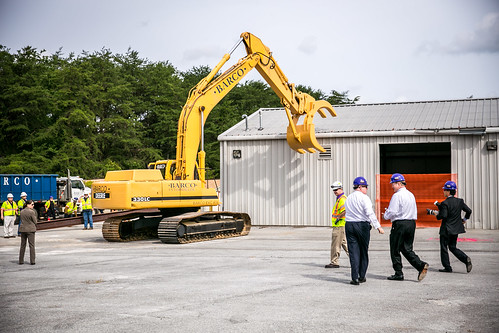
That's Governor Larry Hogan, knocking down a building at the Purple Line groundbreaking. Photo by Aimee Custis on Flickr.

  1. The Purple Line is officially a thing. After a 2014 lawsuit was finally resolved, the light-rail line between Bethesda and New Carrollton finally broke ground in August at a ceremony where Governor Larry Hogan used an earthmover to tear into a building. Construction is well underway in Silver Spring: trees are coming down on the Capital Crescent Trail, the Spring Center shopping center has been roped off and stores have moved out; and Arliss Street in Long Branch will be closed for the next few years. While the work is disruptive, it’ll be worth it. To see all the places the Purple Line will connect, my friend Sean Emerson and I took a trip on the route this summer, which you can watch.
  2. MoCo’s biggest campaign in a long time. Voters approved term limits last year, which means that for the first time ever, three County Council seats and County Executive are all open at the same time. Not only did the 2018 campaign season start early (many candidates announced last summer), but it’s huge, with over 40 people either running or considering a run for County Council alone. To say this is a consequential election is an understatement, as it could bring in a number of new, fresh faces to local politics - or take us a big step backward.

Monday, October 2, 2017

there's a mismatch between the houses DC area buyers want, and what's on the market

Ten years after the Great Recession, home prices in many parts of the Washington region have reached or even topped their pre-recession peaks. But will this trend continue? A look at a wide sampling of real estate websites says yes – but the mismatch between what buyers can afford and what kinds of homes are available could change that.

New townhomes in Rockville. Photo by the author.

The conventional wisdom appears to say we’re not heading into another recession anytime soon. However, while Millennials are finally settling down and ready to buy homes, they will struggle to afford homes in places like DC due to high costs. In the coming years, climbing home prices will stagnate because buyers' income levels increases aren’t keeping pace with costs.

These three things suggest a recession isn’t coming soon

Real estate downturns tend to happen pretty regularly, notes real estate entrepreneur and Harvard Extension School lecturer Ted Nicolais. Going all the way back to the 19th century, real estate downturns take place about once every 16 to 18 years. Since the last recession occurred between 2006 and 2008, he predicts we can expect another one between 2022 and 2024.


Monday, August 28, 2017

as the purple line breaks ground, let's take a look back

I started this blog 11 years ago to, among other things, talk about the Purple Line. And after a long fight that will one day make a great book, the 16-mile light rail line between Bethesda and New Carrollton finally breaks ground this morning.

purple line in bethesda
A 2010 rendering of the Purple Line in downtown Bethesda from the Maryland Transit Administration.
I'm on my way to cover the groundbreaking (check back this afternoon for a recap). But in the meantime, let's look back at how JUTP has written about this project. Of the 1735 posts published here, about 281 have included the words "Purple Line." Here's an (incomplete) list of the highlights.
  1. This project has been in the works since 1986! Here's how the Purple Line got its start.
  2. These maps show how the Purple Line will dramatically improve mobility around the DC area, particularly for folks in eastern Montgomery County and Prince George's County.
  3. I took a walk with some East Silver Spring neighbors along a potential route in 2006. The following year, I walked the Capital Crescent Trail, part of which will be the Purple Line's route, with both supporters and opponents.
  4. More than a few politicians have taken the bus as a campaign stunt to promote the Purple Line. We rode the J2 with Steve Silverman in 2006, and again with Al Wynn in 2007.
  5. Did you know there's a musical about the Purple Line? In 2008, we interviewed Paul Stregevsky, writer of "Tracks."
  6. In 2008, I convinced my then-roommate Chris to take transit from College Park to Rockville to illustrate how much we need the Purple Line. It was quite a day.
  7. The new Silver Spring Library actually has its own Purple Line stop! Here's a look at the design process from 2010.
  8. The Purple Line will pass through several Montgomery County neighborhoods, and could bring some major changes. Here's what community members in Long Branch, Lyttonsville, and Chevy Chase Lake had to say about it.
  9. The town of Chevy Chase has been a vocal opponent of the Purple Line for decades, but many town residents weren't having it anymore. 
  10. Supporters and opponents squared off at a 2013 event where Governor O'Malley first announced state funding for the project.
  11. President Obama announced federal funding for the Purple Line in 2014, and it looked like full speed ahead.
  12. After his election in 2014, Governor Larry Hogan put the Purple Line on hold, but decided to move forward with a few cost-saving changes, like fewer trains and redesigned stations.
Today, many many people who helped make the Purple Line a reality will be celebrating. But one person won't be here: Harry Sanders, who passed away in 2010. We wouldn't be here today without the decades of hard work and quiet persistence Harry poured into this project, along with his wife Barbara and son Greg, who's currently the president of Purple Line NOW!

Harry was a model for citizen activism, and I continue to learn from his example. I can't say it enough: thank you, Harry, for everything.

Friday, August 18, 2017

thanks to everyone who came out on tuesday!

Thanks to everyone who came to our happy hour on Tuesday celebrating the 11th anniversary of Just Up The Pike and our friends at Greater Greater Washington!

I address the crowd at Tuesday's event. Photo by Aaron Landry.
Over a hundred people packed the rooftop at Kaldi's Social House in downtown Silver Spring for a special joint happy hour. On top of that, I received a proclamation from the Montgomery County Council for my work. At-large County Councilmembers George Leventhal and Roger Berliner, and District 5 Councilmember Tom Hucker were there to present it. (Councilmember Hans Riemer first proposed the proclamation, but he was on vacation and couldn’t attend.)

All three talked about something I’ve tried to do since I started Just Up The Pike in 2006: to help craft a vision for Silver Spring and East County in a way that is both positive and constructive.


Thursday, August 3, 2017

since the great recession, east county's real estate market has diverged

Nearly a decade ago, the Great Recession wiped out house values across the region. Today, booming close-in, urban areas have basically recovered. But many further-out, suburban communities are still struggling. Here’s one example from eastern Montgomery County.
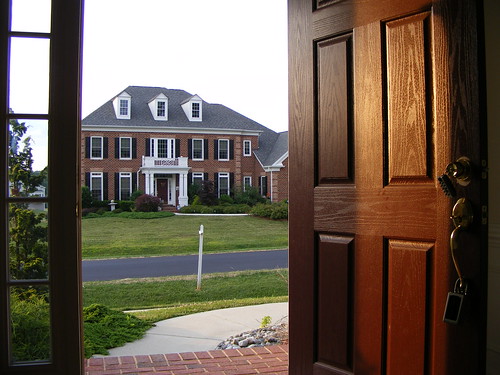
McMansion, Meadowsweet Lane, Sandy Spring
A 2000s-era subdivision in East County. Many of these homes lost value during the Great Recession and have yet to recover. All images by the author.
I grew up in downtown Silver Spring at a time when people were still moving away from urban centers. Twenty years ago, my neighborhood consisted of abandoned buildings and boarded-up stores, and in 1998, my parents started looking for houses outside the Beltway in places like Olney and Burtonsville, which seemed ascendant at the time. Besides, we were already driving to shop there. My parents found a little split-level house a mile from a new shopping center with a Target, Chipotle, and Starbucks.

My high school, Blake, opened that same year, and most of my friends’ parents seemed to have made the same move from Silver Spring and Takoma Park. New subdivisions were popping up with big, luxurious houses, lush lawns, and names like Briarcliff Manor and Hampshire Greens. In the older neighborhoods, houses were sold for the land so big McMansions could rise in their places.
I remember going to a party at the end of high school where we sat in a circle bragging about how much our parents’ houses were worth. I was the odd one out because my parents’ house had appraised recently at a measly $500,000.
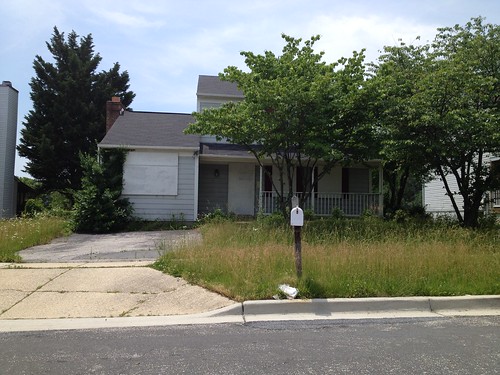
Abandoned House in Tanglewood
An abandoned house in an East County subdivision in 2014.
But it wouldn’t last; the Great Recession hit East County pretty hard. Burtonsville Crossing, the shopping center where we hung out in high school, is almost completely vacant. Some of my parents’ neighbors, unable to make ends meet, resorted to running illegal auto shops out of their homes, inviting relatives to move in, or renting out their basements.

Meanwhile, downtown Silver Spring had a comeback as more people sought urban living. A major redevelopment project along Ellsworth Drive brought restaurants, shops, movie theaters, and a Whole Foods. Montgomery County poured millions into new public facilities, including a library, the Civic Building, and Veterans Plaza. In response, private developers built thousands of new apartments and condominiums, including the building I live in now, a converted bottling plant that was still operating when I was a kid.

Here's how the real estate market in East County has changed

The real estate market shows how Silver Spring has bounced back from the recession while East County has struggled. Here’s a graph showing average home values in 2012 and 2017 as they compare to 2007 levels. It shows the two zip codes inside the Beltway, 20910 (Silver Spring) and 20912 (Takoma Park), and seven zip codes (mostly) outside the Beltway: 20901 (Four Corners), 20902 (Wheaton), 20903 (Hillandale) 20904 (Colesville, Fairland), 20905 (Cloverly), 20906 (Aspen Hill) and 20866 (Burtonsville).

How 2012 and 2017 home values in East County stack up to 2007 levels. Click on all of these graphs to enlarge them.

Home values all over East County fell during the Great Recession. In zip codes 20903 and 20906, home values fell by nearly half between 2007 and 2012. This year, average home values in the eight zip codes outside downtown Silver Spring are 71% to 85% of what they were a decade ago. But in zip code 20910, which contains downtown Silver Spring, values are actually a little higher than they were 10 years ago.

Home values inside the Beltway have recovered, but remain lower elsewhere. 

Homes inside the Beltway have been more valuable than those outside it for a while now. But the gap in home values has increased over the past 10 years. This graph shows the average home sale price per square foot, as a way to even out differences between houses of different sizes and styles. In the summer of 2007, the price per square foot in zip codes 20910 (Silver Spring) and 20866 (Burtonsville) were fairly close, at $363 per square foot and $304, respectively. Today, they’re $384 and $257; in other words, a difference of 50%.

Those who bought homes in East County before the housing boom, or at the bottom of the market, may have recovered their investments or even made a little extra. But those who bought at the top of the market saw their gains wiped away.
Homes in far-flung zip code 20905 linger on the market longer than homes closer in.

Another measure of demand is the number of days a house sits on the market. During the Great Recession, houses across East County languished for months due to a lack of buyers. In early 2008, the average house in zip code 20905 sat on the market for nearly six months. Demand returned, but not equally. In early 2017, homes in the 20910 zip code spent just 22 days for sale, compared to 59 days in 20905.

There's a huge opportunity in East County, but things need to change

Like many aging suburbs, East County is caught in the middle. The kids I grew up with have either moved to urban areas closer in, or moved farther out to newer suburbs in Olney or Howard County, aided by new highways like the InterCounty Connector that made it easier to commute longer distances. East County is a long drive from Montgomery County’s biggest job and shopping centers, which are all along Rockville Pike and I-270. And the local schools struggle with a negative reputation compared to their counterparts in more affluent areas.
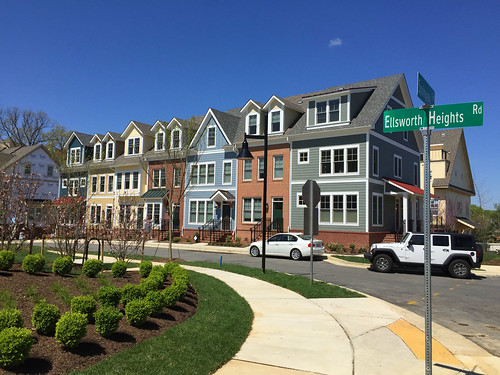
Corner of Springvale Road and Ellsworth Heights Drive
New townhomes in downtown Silver Spring, where home values are higher than they were in 2007. 
Yet the fact that homes here are much more affordable than in other parts of the county could be a big opportunity. Nationwide, some three million Millennial homebuyers have been shut out of the housing market because of high prices and a lack of supply. Millennials are open to living in suburban areas, but want stuff they can walk or bike to.

Providing that lifestyle in East County is imperative to drawing people and investment to this area, just as it did in Silver Spring. Montgomery County’s plans to create a walkable town center and research park in White Oak and a new village center in Burtonsville will bring the amenities people want, while a new BRT line on Route 29 will provide faster, more reliable transit. Combined, the two will give East County access to jobs, shopping, and economic opportunities.

East County has waited decades for the kind of prosperity the rest of Montgomery County takes for granted, and at great cost. Hopefully residents won’t have to wait much longer.
Monday, July 17, 2017

come celebrate 11 years of JUTP

Kaldi's. Photo from Google Street View.

Just Up The Pike turns 11 this year, and I'd like to do something about it. We've built a community of a couple thousand readers, contributors, and local leaders, and I invite all of you to celebrate over a decade of celebrating East County on Tuesday, August 15 from 6 to 8pm at Kaldi's Social House, located at 918 Silver Spring Avenue. As one of Silver Spring's fifteen (and counting) coffeeshops, Kaldi's is not only known for its brewing techniques but its rooftop bar overlooking downtown.

Joining us will be our friends at Greater Greater Washington, a regional website and advocacy organization that I've been a part of for eight years (and have worked for as well). I organize the monthly GGWash happy hours, which rotate around different parts of the DC area, and I'm always excited to bring it here.

Kaldi's Social House is an eight-minute walk from the Silver Spring Metro station (Red Line), as well as dozens of Metrobus and Ride On routes (if you're coming from DC, you can take the 70/79 and S2/S4/S9.) There's a Capital Bikeshare stations two blocks away at Ripley and Bonifant streets. If you’re driving, there’s free parking after 7pm on the street and in the public garage in back.

I hope you see you there! You can RSVP here.

Monday, June 26, 2017

11 years!

wherever you go in #silverspring it feels like the skyline is always there. I find it comforting—I grew up in one of the tall buildings, and when I see them I remember that this is where I came from and where I belong. #latergram #hills #skyline
Looking down Silver Spring Avenue towards downtown Silver Spring. Photo by the author.
One of my favorite things to do is go for long walks around downtown Silver Spring, whether with my partner or a friend or, occasionally by myself.

It's been eleven years since I started Just Up The Pike (and twenty-six years since my family moved to Montgomery County). We almost always run into somebody I or we know, and they usually have an update about their life or a bit of local gossip or simply say hi. My boyfriend groans because it means we have to stop for a minute and he likes to keep walking.

I was eighteen when I started this blog and had no real idea of where things would go, and each year on June 26 I take a minute to reflect on it. This blog changed my life. It shaped (and continues to shape) my perceptions of the world. It shaped my career, and as I sought out new topics to research and write about, it reshaped my career multiple times. It's brought me friends online and off.

Occasionally, it has brought me some notoriety. Frequently (more than you may believe, and quite a lot this spring) I question myself and whether this is still worth doing. When that happens I try to remember the speech at the end of "Amputations" by Death Cab for Cutie (taken from motivational speaker Glenn W. Turner), which ends:
"In this modern day and age we have instant coffee and instant tea--instant disbelief. Thats the reason we will never become anything--it is because we will never believe in ourselves. We will always listen to the mass majority. If everybody's making fun of you and criticizing you, then you know you're on the right track. Cause most people ain't got it."
I am thankful for each and every one of you who has read this blog and supported me over the past eleven years. I don't think you know how much that means (and continues to mean) to me.

In any case, I would like to celebrate this birthday with y'all at some point this summer. Please keep an eye out for an announcement soon.

Tuesday, June 20, 2017

ride on's most popular routes aren't where you expect them to be

Montgomery County’s Ride On is the busiest bus system in the DC area after Metrobus, carrying 75,000 riders each day. Its most popular bus routes, however, might surprise you.

Ride-On Bus, Century Boulevard
A Ride On bus in Germantown. Photo by the author.
Here’s a map of the ten most heavily used Ride On routes in Montgomery County. They all have a couple of things in common, which can tell us a lot about the state of transit in the county.

These are the most popular Ride On bus routes. Map by the author using data from MCDOT.

For starters, many of these routes have simple, easy-to-remember routes, a key feature for growing ridership. The 46 (Rockville-Medical Center) and 55 (Germantown-Rockville) both run on Route 355 with few deviations. The 100 (Germantown-Shady Grove express) follows I-270, making one stop in Germantown and another at the Shady Grove Metro station. Riders don’t need to be intimately familiar with each route in order to use it. They just need to know where that street goes.

In addition, most of these routes are pretty frequent, running all day, every day, and every 15 minutes or more during rush hour. That means riders can rely on them at all times, without worrying how they might get home if they miss the last bus.

Where these 10 routes go, however, might be the most interesting part. Three of them, the 15, 16, and 20, run between Silver Spring and the Takoma-Langley Crossroads area, a dense corridor with tens of thousands of residents, shops, and jobs. It’s also where the Purple Line will go, demonstrating the there’s a lot of demand for transit here.

A map of Ride On's Route 46, which has a pretty clear, easy-to-follow route along Route 355.

But five of the routes, the 46, 55, 59, 61, and 100, all serve the Upcounty, the newest, most suburban, and most spread-out part of Montgomery County. The prevailing wisdom among some county officials is that transit “doesn’t work” in these areas, unlike the denser, more urban Downcounty, where all of the county's busiest Metrobus routes are. In the Upcounty, the roads are big and fast and you have to travel long distances to get from residential areas to jobs, shopping, or popular hangouts.

Yet these areas still manage to support frequent, heavily used transit service. There are thousands of car-free and one-car households in areas like Gaithersburg and Germantown who depend on transit. The Upcounty also has lots of places that people want to go to: Montgomery College and the Universities at Shady Grove; two hospitals; big shopping centers like Lakeforest and Milestone; and walkable, urban-ish neighborhoods like Rio/Washingtonian Center and Germantown Town Center.

That’s something to remember as the county considers building new transit lines to serve the Upcounty, like the Corridor Cities Transitway and bus rapid transit on Route 355 - as well as big highway projects like M-83 and adding new lanes to I-270. Driving rates in Montgomery County have stayed flat over the past 15 years, even as 100,000 new people moved here. And it’s because some of those people, even those coming to Germantown, took the bus.

Tuesday, May 2, 2017

it's true, I am applying for the montgomery county planning board

Awesome photo of me by Aimee Custis.
Some of you may already know this, but last month I applied for a position on the Montgomery County Planning Board. This June, there will be an open seat when current member Marye Wells-Harley must step down due to term limits.

I've spent a long time thinking about this. Over the past few months, I've traveled across the county, hearing from residents, community advocates, and business owners about the issues and challenges facing our county. If you've been reading this blog since the start (11 years next month!) you know that this county, and East County, is constantly evolving, and we have an awesome opportunity to make it a more inclusive and sustainable place. I hope to help our county leaders do that.

Next week, the County Council will interview me and three other applicants, all on live television. And sometime in May or June, the council will vote to appoint the new Planning Board member. If you'd like to write them a letter on my behalf, I'd be honored to have your support. You can send an email to county.council@montgomerycountymd.gov.

As part of my application to the County Council, I included this letter:

We are at a crossroads in Montgomery County. For decades, Montgomery County was a prosperous and largely homogeneous bedroom community for the nation’s capital. In recent years, that has changed. We are still prosperous, though many parts of the county struggle with poverty; we’re far more diverse, having become majority-minority in the 2010 Census; and we’re no longer a bedroom community, as according to the Census, 60% of employed Montgomery County residents work in the county.

Yet ahead lie big changes in how we live, work, and get around. The county is largely built up and there may not be opportunities to accommodate new growth simply by sprawling further out. There’s a growing demand for walkable communities with at least some urban features, not only from young adults but also from retiring adults, and from the county’s growing minority and immigrant communities.

Big employers seek smaller office spaces and are leaving office parks for Metro-accessible locations, while major chain retailers shrink or close altogether, leaving gaps in our malls and shopping districts. New technologies like bikesharing and ride-hailing are creating new ways to get around, but the looming threat of autonomous vehicles could totally disrupt the way we inhabit our communities altogether.

For the past eleven years, I have watched those trends as a community member and an urban planner, and I’ve seen how they’re already starting to transform Montgomery County. I have the experience needed to help this county meet these challenges head on. As a younger person who grew up in East County, I have the perspective to speak to the vast array of experiences Montgomery County residents have, especially those who do not always participate in local affairs.

I’ve spoken with so many people in this county who struggle to find housing they can afford with easy access to jobs, education, or loved ones. Aging Baby Boomers say they’re ready to downsize from their big single-family home, and unable to find an apartment or condominium nearby that meets their needs. Others say their kids moved to Frederick County or out of the region because they simply can’t afford it here. Many of my own friends, who grew up here and are now settling down and starting families, tell me that they can’t find the kind of housing they want.

This county has a responsibility to protect and preserve our neighborhoods, as well as our environment, our economy, and social opportunities. I learned from last year’s election that people in Montgomery County are excited to be engaged in their community, and I want to use this position to engage them.

We have the opportunity to create a stronger, more equitable, more vibrant county, and one that can be an example for communities around the nation. I would like to work with the Planning Board and the County Council to help accomplish that.

Wednesday, February 22, 2017

"be in the right place at the right time" is not a strategy for buying a house

How can you afford to buy a house in sought-after parts of DC or other close-in areas? By moving there twenty years ago. But that's no help to people navigating the housing market today.

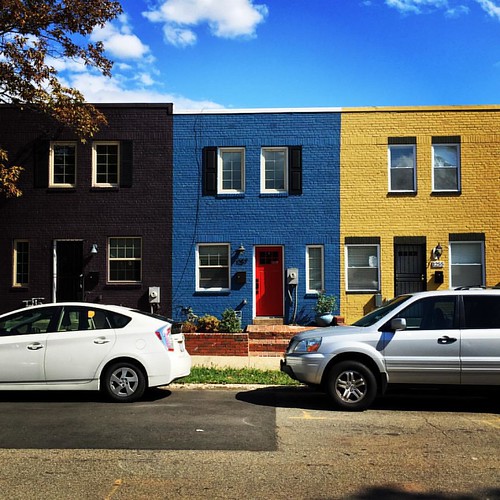
Fun with color and repetition: I'm really enjoying these rowhouses in Trinidad. (Another DC neighborhood I was taught to fear as a kid, now I can't afford to live there.)
Photo by the author.
One out of every ten houses currently for sale in DC is listed for over a million dollars. Curious to find out who's living in them, former GGWash contributor Rob Pitingolo at the Urban Institute found that million-dollar home owners in DC are generally not wealthy, nor do they work in high-paying fields. Many of them have just lived here for a while and bought their houses before 2000, when house prices were much lower. WAMU talked to Cleveland Park resident Robert Edmonds, who said he was simply in the right place at the right time:
“I think it would have been a lot more challenging to try to buy now,” Edmonds said. “We purchased about 15 to 18 years ago, when the market was just starting to really skyrocket. … I wanted to start a family, and we wanted to buy, get some equity, and I think we just happened to do it at the right time. If we did it 8 or 10 years later, I think we really might have regretted it for a while, at least.”