Showing posts sorted by date for query guest blog. Sort by relevance Show all posts

Friday, February 24, 2017

route 198 could be safer, but only if the community asks for it

This is a guest post from our friend Sebastian Smoot, who's president of the Good Hope Estates Civic Association and has an awesome new blog called Growing East County about (you know) East County.

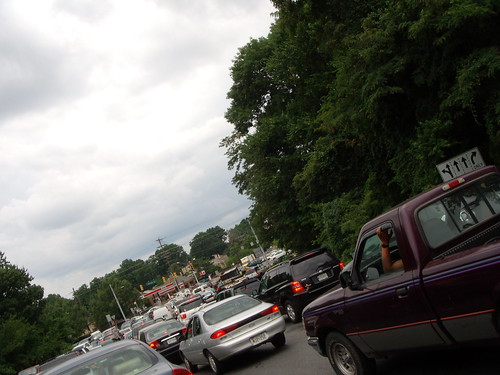
A debate over how to fix a dangerous road in Burtonsville has been going on for nearly 20 years. But the state of Maryland is ready to move a plan forward, and if residents seize the moment, they can push for sidewalks, traffic lights, turn lanes, crosswalks, bike trails, and a grid of local streets.

Image by Maryland SHA.

An unincorporated town with approximately 13,000 people, Burtonsville is the easternmost town in Montgomery County. Over the past few decades, Burtonsville has been and continues to be developed as an auto-centric town. It lacks walkability and suffers from a lack of public gathering spaces or a defined community center.

Despite these challenges, Burtonsville has an opportunity to re-define itself as a thriving village with regional appeal. Three years ago, GGWash senior editor Dan Reed suggested Burtonsville could become the "next Mosaic District".

For many locals, the key to Burtonsville's revitalization is making it's roads safer for drivers, cyclists, and pedestrians. One idea is to transform MD 198 from a dangerous, chaotic, and high-speed thoroughfare into an attractive and walkable "Main Street.”


Wednesday, June 29, 2016

this blog has officially consumed a decade of my life

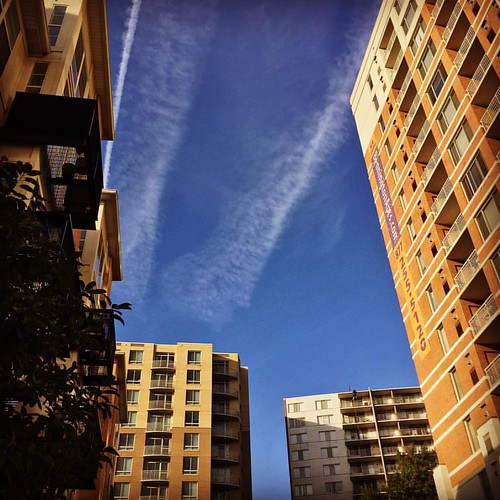
I like how the buildings frame the sky this morning (clouds, contrails).
It's official: this blog is ten years old. In that time, I (and many guest contributors) have written 1700 blog posts, while you (the readers) have written over 6500 comments, and given us millions of pageviews. This blog has outlived eight moves, about a half-dozen relationships, fourteen(ish) jobs, three computers, and two bikes. It has changed my life in a really profound way that I could have never imagined when I first sat down at my computer one summer night in 2006.

So now what? For starters, I'm still writing, albeit much less frequently, but you can still get frequent updates about Silver Spring and Montgomery County (and yours truly) on Twitter, Facebook, and Instagram. You can find me writing about design and transportation stuff as a contributing editor to Washingtonian and occasionally at other places, like CityLab and Montgomery Magazine. And I'm always looking for new ways to cause trouble in Montgomery County with the Action Committee for Transit and One Montgomery.

Here's to another decade (am I really committing to this?) but in the meantime, let's drink. Stay tuned for an announcement about some kind of JUTP happy hour.

Monday, March 5, 2012

guest blog: why maryland desperately needs a gas tax

Today's post comes from Scott Goldberg, Bethesda resident and former candidate for state delegate, on why Maryland needs a gas tax to pay for the state's pressing transportation needs. For more of Goldberg's thoughts on transportation from the Purple Line to energy independence, check out his 2010 interview with Greater Greater Washington.

And as always,
JUTP is looking for guest posts. If you've got something to say, feel free to e-mail me at justupthepike at gmail dot com.

Super Traffic


If you’ve been outside of your home in the last decade you know that our roads, buses and trains are at their breaking point. Whether it’s sitting in traffic on the beltway (DC or Baltimore, both work for our purposes) or watching a full Metro train pass you by, you know something needs to be done. This may come as a shock but the ICC hasn’t solved all of our transportation problems. Maybe it’s time to actually have an adult conversation and get serious before something crumbles and people die.

Let’s discuss the wonderful world of Maryland transportation. Maryland pays for transportation projects in a variety of ways. Sometimes we use bonds. The Maryland Transportation Authority sells bonds and uses GARVEE bonds (look it up). Sometimes we pay cash. The Maryland General Fund or Transportation Trust Fund (TTF) are huge sources of money. And if Uncle Sam is feeling generous, the federal treasury helps foot the bill too. It doesn’t hurt that Marylanders send 18.4 cents per gallon of gas straight down 16th Street to the Treasury Department.

I’d like to focus on the Transportation Trust Fund for the time being because size matters and the TTF is the biggest source of revenue.

What is the Transportation Trust Fund? It is a “dedicated” fund started in 1971 that finances the Maryland Department of Transportation (MDOT). The TTF gets its money from the gas tax, excise taxes, motor vehicle fees (registrations, licenses and other fees), federal aid, corporate income taxes, operating revenues (e.g., transit fares, port fees, airport fees), and bond proceeds. MDOT uses the money to maintain and operate roads, bridges, trains, airports, sea ports, and buses. Pretty straightforward.

So why does the TTF need additional revenues? Easy. Two main reasons: 1) the fund’s primary source of revenue, the gas tax, is the same as it was in 1992, 23.5 cents, and 2) since 2003, the state stopped giving counties and localities their portion of the funds and paid other bills with the money instead. Reason 2 has been characterized as transfers, reallocations, adjustments, raiding or even stealing. At the end of the day, our government took about $1 billion it was supposed to spend on roads, bridges and trains, and spent it on other stuff. Oops.

Fast forward to right now and we’ve got more people to move around and less trains, buses and roads to do it. Oh, and our bank account is running pretty low. Enter the gas tax. Last fiscal year the gas tax brought in $746 million. Governor O’Malley proposed the proposal of the Blue Ribbon Commission on Maryland Transportation Funding that nets the most amount of money which would be to apply the 6% sales tax to the retail price of fuel. That brings us about $600 million. It’ll cost someone who drives a lot about $150 per year and will probably save them more than that in wear and tear. It pays all the back money we owe to the counties and Baltimore City in a year and a half and gives us the spending power to not only make sure bridges don’t collapse, but construct a modern transportation system.

It is big, it is bold, it is decisive, it could bring Maryland back into the game with the proverbial “one swing of the bat.” You should absolutely not support it . . . yet.

Imagine walking into a restaurant and the host asks you to pay $25 per person. The catch is that there is no guarantee that you’ll be seated, get food or be allowed to stay. That’s what Governor O’Malley is asking you with the gas tax. He is asking you to pay more but not assuring you that the money will go directly towards transportation projects or would ever be spent on infrastructure. The Blue Ribbon Commission nailed it on the head in their first recommendation to restore trust to the Trust Fund: enact laws that prevent money from being taken out of the TTF for non-transportation reasons ever again.

If he can guarantee that, let’s go back to the restaurant analogy and ask to see the menu. Can we have the Purple Line and Rapid Transit Vehicles in Montgomery County, Red Line in Baltimore, Corridor Cities Transitway to Frederick, smarter traffic lights, bike lanes, and an easier trip to Ocean City for dessert? After a meal like that, I would be ready to pay the bill.

We should make our Governor make the case of why we need to pay more at the pump. Marylanders need to know what transit projects are going to be engineered and built, which roads will be paved, and where train tracks are going to be laid. We’re being asked to take money from our bank account and put it in Maryland’s bank account and that’s OK. I just want to make sure that my money and your money will result in all of us spending less time getting to and from work and more time with our families or if you don’t like your family, somewhere else you enjoy being.

When our Governor speaks up and tells us why we need to pay more, what we’ll specifically be paying for and how much it will cost us, then we should support him because by supporting his plan, we’ll really be helping ourselves.

Scott Goldberg

Monday, November 21, 2011

guest blog: flower avenue holiday market opens this weekend

Thanksgiving may mark the start of the holiday season, but it doesn't mean the end of shopping outside. Amanda Kolson Hurley, friend of JUTP/Silver Spring resident/freelance writer who's responsible for my appearance in a professional magazine, sends us this guest blog about the Flower Avenue Holiday Market, making its début this weekend.

Market founders Christopher Lancette (right) and Won-ok Kim.

A few weeks ago, the Fenton Street Market's long struggle with county bureaucracy seemed to resolve in a happy ending, with the market - which closed out its season on Nov. 12 - likely to return to Veterans Plaza next spring. Now a wintertime antique and flea market opening this weekend in Long Branch will help bridge the gap until FSM's return (fingers crossed).

The Flower Avenue Holiday Market will run on Saturdays from Nov. 26 through Dec. 24 at the corner of Flower Avenue and Arliss Street, one a block from Piney Branch Road. Open from 9 am to 4 pm, it will sell used furniture, antiques, art, vintage toys, local crafts, and more, says Christopher Lancette, a Silver Spring resident who's organizing the new market with his girlfriend and business partner, Won-ok Kim.

Lancette and Kim run Orion's Attic, a home-based antiques business they grew by staging "upscale yard sales" and selling through their website and on Craigslist and Ebay. They weren't ready for a full retail store, but a seasonal market - one that could build on and complement Fenton Street's success - seemed ideal.

Reemberto Rodriguez of the Silver Spring Regional Center steered them to the one-acre parking lot on busy Flower Avenue, and the lot's owner, Greg Fernebok of The Harvey Companies, was so taken with the idea that he offered to donate the lot rental fee to a nonprofit group, IMPACT Silver Spring. IMPACT will also have a role in the market itself - Lancette emphasizes that doing social good and nurturing local micro-businesses are central to the mission. Longer term, Lancette and Kim hope that their venture, in tandem with Fenton Street, Freshfarm, and other local markets, can make Silver Spring a regional "market destination," an idea he's discussed with State Senator Jamie Raskin.

Nine or 10 vendors in addition to Orion's Attic have already signed up, Lancette says, and he and Kim are looking for more. See the Orion's Attic website for the application form and more details, and stop by the market's opening day this Saturday, November 26 from 9am to 4pm.

Wednesday, July 20, 2011

guest blog: give teens empowerment, not a curfew

Play Ball, Bethesda Avenue
Teens enjoying fun, wholesome activities in downtown Bethesda.

Last week, County Executive Ike Leggett proposed setting a curfew for young people under 18, preventing them from being out in public after 11 during the week and midnight on weekends. Though Leggett says the measure will curb gang violence, police statistics show that crime in Montgomery County has been dropping for years. Not surprisingly, the public is skeptical: the Gazette ran an editorial saying there are "too many questions" about the curfew to implement it now, while a "Stand Up to the MoCo Youth Curfew" Facebook group has 4,777 members as of this morning.

The following is a guest post from Abigail Burman, one of the group's four organizers who's also appearing on the Kojo Nnamdi Show today. She grew up in Silver Spring, attended from Richard Montgomery High School, and has some alternatives to dealing with youth crime that don't penalize all teenagers. Take it away:


I understand that people are upset. There are bad people in the world, and we hear about the bad things they do. We hear about gang violence, and delinquent youths, and damaged property. And I understand that this fear may make curfews seem like a good idea. But we can’t give in to fear. Because the final sign that criminals have beaten us is when they manage to convince us that we should confine a large segment of our population for no reason other than their age. At that point they’ve gotten us to shut people out of their own communities.

And communities are a powerful, powerful thing. As Dan pointed out, creating more gathering spaces helps teens turn their attention to constructive and safe pastimes, and public spaces create social pressure to act within the law. But there are other ways the community of Montgomery County can engage teens. Although elected officials and adults are constantly worrying about gang activity and delinquency among kids, they almost never involve the actual kids in these discussions.

There have been concerns about gang activity and other crimes at nearly every MCPS school I’ve attended, but the only time I remember a teacher talking to the students about these problems is a health class spent listening to a series of bloody urban myths about gang initiations. My classmates and I were left cringing or bored, not engaged in solving a problem that was affecting us just as much, if not more than, the adults.

In California, the Gang Violence Suppression Program helps communities fight crime while showing young people another way. The state-wide program provides grants for local governments to ramp up law enforcement and prosecution, while giving parents, teachers and at-risk youth tools to prevent the growth of gangs. This method was highly successful, because it allowed community leaders to fight gangs while showing young people meaningful alternatives to gang involvement.

The lesson: if you empower teens to make the choice to not break the law, they'll encourage their friends to do the same. Invest them in the community so they’re less likely to want to damage it. And when teens trust law enforcement and government officials, when they care about where they live, the two groups can work together to make the county a safer place to live, instead of enacting a curfew that would alienate all youths in the name of penalizing a few.

With young people and adults working together, it will be much easier to combat youthcrime in a way that, unlike a curfew of questionable legality and efficacy, has been shown to work. Dan mentioned that crime has been going down in Montgomery County. A closer look at police statistics from this year reveals that Part II offenses (which include juvenile crime) have gone down as arrests for Part II offenses has gone up. We don't need a curfew to reduce crime when existing laws are already doing so. It's clear we just need to step up their enforcement.

If you’d like to join us in opposing the curfew, we would love it if you signed our petition. You can also attend a public hearing on the proposed curfew at the Council Office Building, 100 Maryland Avenue in Rockville, on Tuesday, July 26 at 1:30pm. For more information or to testify, check out the County Council's website.

Thursday, December 9, 2010

guest blog: revisiting the filbey building

The Filbey Building (Postal Workers Union)


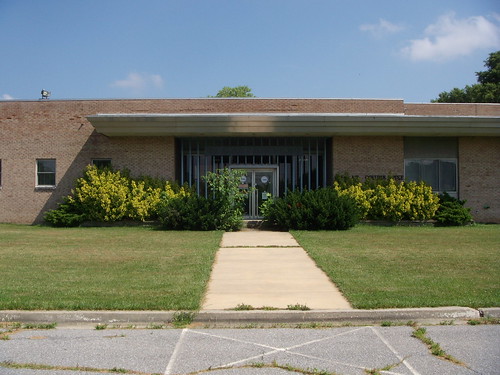
Over two years ago, we wrote about the Francis Filbey building at Route 29 and Industrial Parkway, which was home to the American Postal Workers Union until they moved to Glen Burnie several years ago. Today, the building sits abandoned but hasn't really received any attention despite its prominent location. (Six of the top ten hits for "francis filbey building" on Google are posts I wrote.)

Daniel Jordan, who worked under Francis Filbey as general counsel for the American Postal Workers Union, wrote me yesterday to make a few corrections to my post and about the history of the Filbey Building and the union:

I happened to stumble upon the piece you wrote in July, 2008 about the Francis S. Filbey Building on Columbia Pike. Even though it is of no importance, I felt the need to correct some of the factual errors it contained and add a personal note. By the way since that was two and a half years ago I have no idea what has happened to the building since then.

I am the former general counsel of the American Postal Workers Union having become one of the union's lawyers when it was formed. Contrary to what you stated, APWU was not formed by mergers over the 60's and 70's. Rather, as you did say, there was a postal strike in 1969 which was settled early in 1970 and that settlement was embodied in the Postal Reorganization Act which was passed by Congress. That led to the merger of five postal unons at one time in early 1970. The largest was the United Federation of Postal Clerks. That union, and several of the others had existing health plans. The UFPC plan was continued as the APWU plan and established its offices at the Columbia Pike location. That was done long before the 1981 construction date you mentioned which I know because I went there on fund business all through the 70's and had severed my connection with APWU in 1980.

As you stated Francis S. Filbey became the first President of APWU when the merger took place and remained in that poistion until his death in 1977. He was one of the finest men I ever knew. He was intelligent, gentle. thoughtful and perceptive. These traits were not so easy to find in other labor leaders I knew over the years.

Thanks, Daniel. And for You, The Reader: as always, if you've ever got something to say about East County, say it here. Leave a comment or shoot an e-mail to justupthepike at gmail dot com.

Thursday, November 18, 2010

guest blog: the problem with the burtonsville giant

While handling constituent correspondence for Councilmember Leventhal last year, I learned that the best response is often (though not always) a speedy one. That's why I was happy to find this response to yesterday's post on the new Burtonsville Giant from District 14 Delegate-Elect Eric Luedtke, who represents Damascus, Olney and Burtonsville. In the following guest post, Luedtke expresses concerns about the grocery store's recent move.

Burtonsville Town Square (former Burtonsville Shopping Center)
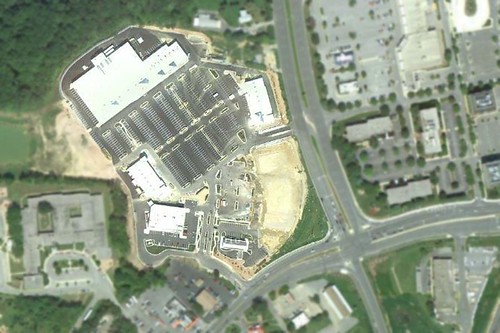
Giant moved last week to the new Burtonsville Town Square, pictured above, from across the street.

As a newly elected politician, I find myself the focus of criticism fairly often now. It’s not often, however, that I find myself nodding along. There is a lot of truth in what Dan wrote about the Giant reopening in their new location in Burtonsville Town Square. It’s not a new amenity, it’s not really much progress, and its best feature is that it updates a store that was built in the era of Flock of Seagulls and the Cosby Show.

So it may have been overstated when I said in my remarks that the opening was the first step in Burtonsville’s revitalization. Is it a positive thing to have a newly renovated, nicer store? Certainly. Is it going to lead to some renaissance in the Burtonsville area? Probably not.

In fact, Giant is doing significant harm. Leaving their previous location presented a challenge, one which an experienced property owner like Edens & Avant (the owners of Burtonsville Crossing) should have been able to solve. Except that the Giant’s old lease gives it veto power over any new anchor store in the old location, and Giant is using that power to reject any potential competitor.

I respect Giant and their need to run a profit. I do not respect them placing a stranglehold on Burtonsville in order to maintain a monopoly. Among the thousands of doors I knocked on this summer were many who said of the situation, “That should be illegal.” It may be something to think about, now that I’m a legislator.

But I’m still holding out hope that Giant will be a good neighbor, and give up their veto power on a new tenant. It was that mingled hope and concern that I expressed to a Giant public affairs executive at the opening. He assured me that he would pass on my concerns and let me know who in the company I could speak to about them. I have yet to hear back.


As always: If you've got something to say about East County, say it here! Leave a comment or send your thoughts to justupthepike at gmail dot com.

Tuesday, November 16, 2010

guest blog: complete street smarts

The following comes to us from guest blogger Alex Hutchinson, a Takoma Park resident and intern at the Planning Department. He last wrote for JUTP about the proposed Silver Spring Library pedestrian bridge. If you have any questions or bones to pick, please contact him at alexanderehutchinson at gmail dot com.

Photo by the author.


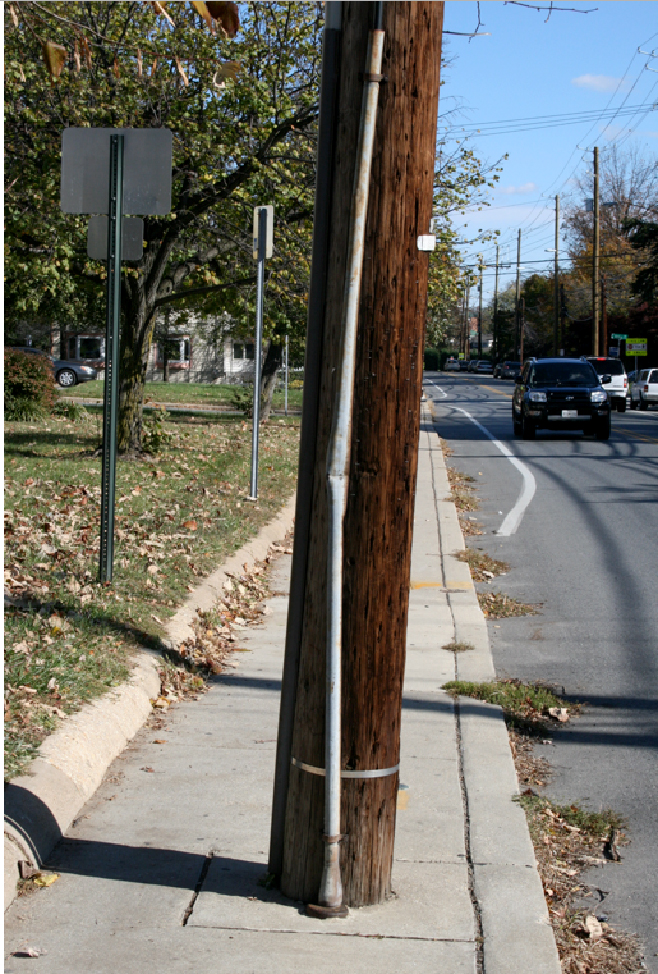
If a car were blocking a major intersection, it would be towed within minutes. Yet this telephone pole gets a free pass despite being directly in front of the Silver Spring Police Station.

Walk around Silver Spring and you’re likely to notice the numerous light poles, parking meters, and electrical boxes inconveniently placed in the middle of sidewalks and curb ramps.

Through a comprehensive set of sidewalk and street improvements, we can restore equal access while promoting healthy walkable communities.

Planners and traffic engineers are spreading the gospel of complete streets, which provide equal access to bicycle, pedestrian, transit, or car users regardless of age or ability. Complete streets include wide sidewalks, bike lanes, frequent crossing opportunities, median islands, and more.

A few weeks ago, The Coalition for Smarter Growth hosted Ian Lockwood, a transportation expert who talked about complete streets and the communities in the United States and Canada he has helped fix. Lockwood was a consultant on the recently approved White Flint Master Plan.

One of Lockwood’s counterintuitive ideas is the concept of shared streets. Streets that seemingly lack any organization: no signs, lanes, crosswalks, speed limits, stop lights or curbs.

Lockwood doesn’t say that we should take all the street signs down. Rather, roads must be strategically redesigned for slower, but better-flowing travel. This requires a new set of cues. Raised brick crosswalks are a common shared-space method for slowing cars at intersections because they provide a visual and tactile signal for motorists to brake and watch for pedestrians. Lockwood explains that changes in textures, paving materials, trees, or colors allow streets to dictate the rules of the road better than any sign.

Ellsworth Drive Open, Nov. 2009 (1)
Cars and people share Ellsworth Drive in downtown Silver Spring. Photo by Dan Reed.

Silver Spring’s Ellsworth Drive is a great example of this. When the street is open to traffic on weekdays, cars move at a leisurely pace creating a safe environment for pedestrians of all types. The varying surface from brick to asphalt keeps drivers alert and aware of their surroundings.

Downtown Silver Spring has many of the critical features that Lockwood emphasizes for successful shared spaces: a good street network, buildings that hold the street, lots of pedestrians and cycling, and a vibrant environment for entertainment and social contact.” This idea of shared spaces could very well be applied to the Fenton/Wayne intersection.

Many curbs and sidewalks across Silver Spring are being repaired to better accommodate wheelchairs and pedestrians of all types. But awkwardly placed telephone poles, light posts, and even bus stops show many are still in need of work.

William Smith is a Silver Spring resident who has taken matters into his own hands. Smith, who is legally blind, is the founder of the blog Montgomery Sideways, which documents the shortcomings of Silver Spring sidewalks. Smith meticulously records and posts the locations of problem areas on Google maps in hopes that improvements can be made for the disabled. “Crossing the street in this town is downright dangerous,” he says. “The simple act of walking down the street can be an ankle-busting experience for anyone - especially a blind guy.”

The complete street approach is the most sensible and effective option for improving accessibility. By continuing to improve the sidewalks, removing thoughtlessly placed infrastructure, creating shared spaces, slowing down traffic speed and improving our public transportation we can restore equity to those who are less mobile.

It might be simple, but Silver Spring’s solution to the future is the oldest form of transportation: walking.

Crossposted at The Straight Line.

Friday, November 5, 2010

guest blog: let's not cross that bridge when we get to it

The following comes to us from Takoma Park native Alex Hutchinson, an intern at the Planning Department who won their Pecha Kucha contest last month. When he's not applying to graduate schools in Urban Planning you can find him teaching English as a second language, riding his bike on the Capital Crescent Trail, experimenting and failing with the Ride-On bus system or making loud music. Alex became interested in the field of planning after learning about the Curitiba Brazil’s Bus Rapid Transit System. If you have any questions or bones to pick please contact him at alexanderehutchinson at gmail dot com.

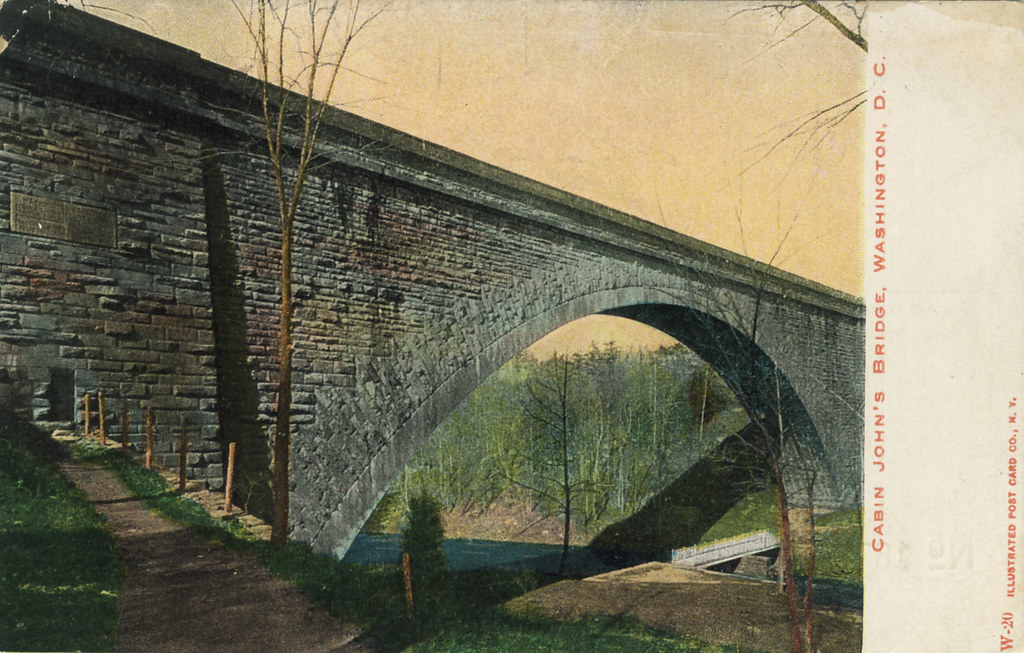
Whether it’s the Boundary Bridge that straddles Rock Creek right outside of Silver Spring, or the Cabin John Bridge, nestled into Glen Echo, I love the bridges our region boasts. I’m no gephyrophobiac, bridges don’t scare me one bit. But, there is one bridge that makes me uneasy - and no, it’s not the Tacoma Narrows - it's the proposed downtown Silver Spring Library bridge. Despite the fact the Planning Board voted 8-1 against the bridge, it has once again become part of our local discourse. Here’s why I hope this bridge wobbles into oblivion.

Silver Spring Library - Proposed Pedestrian Bridge
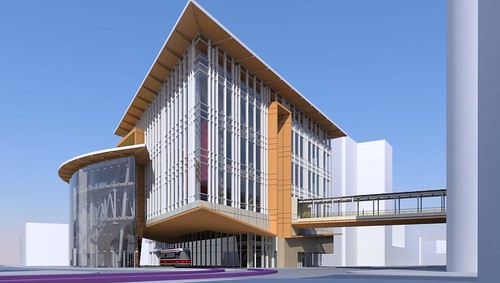
The proposed library bridge at Wayne Avenue and Fenton Street.

It’s been argued that the proposed bridge is the best and most economic way of achieving accessibility for all. Silver Spring already has a skywalk: the bridge which connects the Ellsworth Drive parking garage to City Place Mall. This post isn’t about the untapped potential of City Place, but it’s worth remembering that the skywalk never transformed City Place into the attraction of Silver Spring it was intended to be.

Skywalks, the ill-conceived circulators dreamed in an era of automobile-centric planning aren't necessary in the paradigm of today. In the Board’s discussion, planners made the case that the structure would divert traffic from the active sidewalks and, street level retail that have come to define Downtown Silver Spring.

The bridge would also encourage library users to drive, avoiding the highlights of Silver Spring altogether. Skywalks mainly serve drivers who, at some point, leave their cars to become pedestrians. A problem associated with skywalks is the reluctance of pedestrians to use their circuitous routes and instead brave a busy road in turn running the risk of being struck by a vehicle. Less able pedestrians—wheelchairs, mothers with strollers, the elderly –similarly might opt to cross the road instead of taking the elevator up to the third floor of the parking garage. While the library intersection isn’t a tranquil one-lane country road removing pedestrians from the equation altogether is heading in the wrong direction.

Paul Holland, of the Washington Area Wheelchair Society, is glad accessibility is being emphasized. In a recent conversation, he thought the bridge wasn’t the only option to improve accessibility for those with limited mobility. In fact, pedestrian bridges can be difficult to climb depending on the grade of the incline. He pointed out that the steep angle of Montgomery College’s pedestrian bridge can be strenuous for non-motorized wheelchair users.

According to Holland, the most important corrections for safe intersections are sight lines, gradients, smooth surface transitions from curb to street, light-timing, and driver behavior. The $750,000 estimated cost of the bridge could be more resourcefully spent in some of these problem areas. With just $120,000, affordable alternatives could turn the intersection into something that would be accessible for everyone.

The Barnes Dance at 7th & H in Chinatown. Video courtesy of the District Department of Transportation.

A pedestrian bridge might look good on paper, but one alternative solution might be a Barnes Dance intersection, like the one that opened at 7th and H streets NW in D.C.'s Chinatown earlier this year. These intersections use three traffic signal phases. In one, pedestrians cross in all directions, including diagonally. The other two let traffic go in one of the two directions, but prohibit pedestrians from crossing parallel to the traffic. However not all intersections are created equal, and with the future Purple Line running through this area, the intersection might be too complex for this alternative solution. In addition, teaching drivers to behave in these unaccustomed settings is easier said than done. Pedestrians and traffic officials in the district are already reporting difficulty in enforcing drivers to obey no turn on red signs.

One only has to walk around the relocated Fenton Street Market at Veterans Plaza to see the effect of a pedestrian friendly environment: streets and sidewalks are brimming with artists, merchants, retail, and as a result everyone is more connected to the growing exceptional architecture Silver Spring has to offer. Let’s improve on the Civic Building’s success and learn from the mistakes of City Place.

As always: If you've got something to say about East County, say it here! Leave a comment or send your thoughts to justupthepike at gmail dot com.

Tuesday, June 15, 2010

guest blog: against the generistocracy

Today's guest post comes from Dave Murphy, who writes the blog Imagine, DC. He grew up in Franklin Knolls (off University Boulevard) and offers us this story about coming of age in East County.
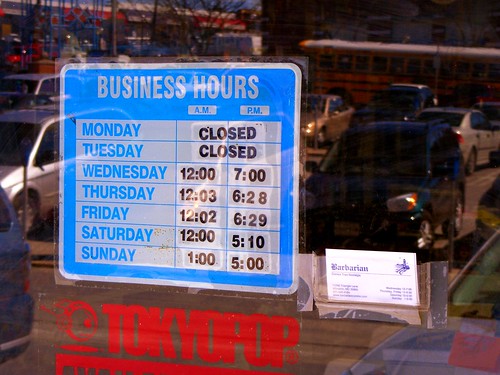
Barbarian Window


Fifteen years ago, I was a nonconformist in high school. Like my older brother before me, I sported wild hair and listened to the latest parent-unfriendly rock music. And I loved visiting Phantasmagoria, a (literally) underground record store on Grandview Avenue in Wheaton.

It was an easy walk from my high school, a since-demolished private Catholic school that has, in its relocation, implied that they want to keep lower middle class students like me from ever attending there again. But in 1995, that school was a quarter mile from the Wheaton Metro station where I caught the C2 or C4 home, and occasionally I would stop in at Phantasmagoria or one of the other quirky little off-the-beaten-path shops in Wheaton along the way.

In 1996, Phantasmagoria moved to Elkin Street, next to one of my other favorite Wheaton venues, Legends Pool Hall. "Phantaz", as we called it, added a grill and a stage at their new venue, and all of the sudden Elkin Street boasted two hip venues. The tight streets and nighttime activity created a sort of feral urbanism, an area to walk around and feel natural despite the fact that I was trying to distract myself from the continuing decay of community and the arts in suburbia.
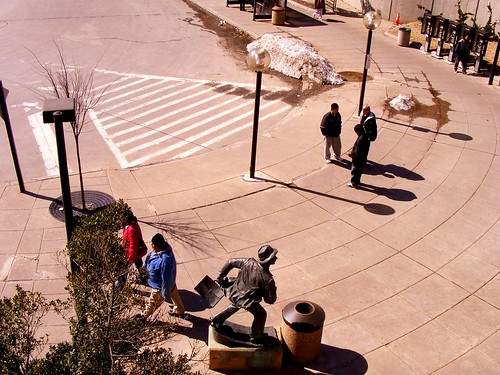
Outside Wheaton Station


Both Phantaz and Legends were places shady enough to be considered cool, but safe enough that my mother would reluctantly approve of me spending Friday nights shooting billiards and going to punk shows. Both were independent businesses, and both were affordable enough for crews of lower-middle class outcasts to seek refuge. In Legends, you were most likely to see Central American or Southeast Asian immigrants on the billiards tables or service industry types at the bar; meanwhile, Phantasmagoria attracted every kind of punk, indie rocker, metalhead, ska fan, or geek rocker you can imagine.

I never got into any trouble there, save for coming home smelling like cigarettes (which I don't smoke now, and certainly wasn't then). Nonetheless, I felt welcome and at home in the shadows and back alleys of Wheaton, not in Wheaton Plaza or fast food joints where my more clean-cut classmates might be found bubbling around after school.

Olney was well represented at my high school. In fact, the shiny new campus is up there, far away from the public transportation that allowed me to attend the Wheaton campus. I was forced to spend a great deal of time in Olney, especially during my junior year when I dated a girl who lived up off Emory Lane.
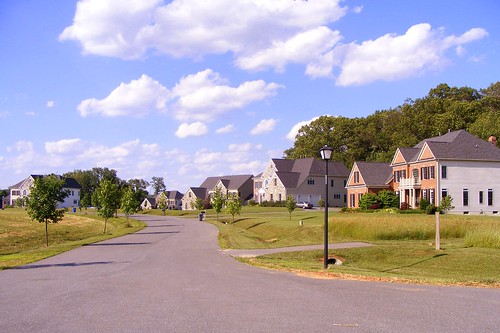
McMansions, Cypress Hill Drive (1)


The entire town disgusted me. I couldn't quite put my finger on why. I often cited the lack of mature trees and the spread out nature, but my friends would accuse me of being jealous of the affluence. There was no walking around. A seventeen-year-old with a ponytail caught milling around in that neighborhood must have looked like a fly on a wedding cake. The vast cul-de-sac mazes of huge colonials with vinyl siding were built to isolate and exclude, and there were no gritty little holes in the wall or back alleys for kids like me to feel at home.

That’s when I coined the phrase "generistocracy" to describe Olney and many other Montgomery County sprawlburbs. It described the people who lived in those crisp, new, bland neighborhoods that where completely devoid of any stimulation and hadn’t been around long enough to develop any character. Generistocracy helped me separate places like Olney from places like downtown Bethesda, home of one of my favorite underground shops, a second hand boutique called Rerun that specialized in hippie attire and rock memorabilia.

Bethesda was wealthy like Olney, but Olney rubbed me the wrong way. I felt welcome in Bethesda. Olney made it clear that I had no business there. Downtown Bethesda wanted me to come in and walk around. Bethesda didn’t have much to offer a kid like me the way Wheaton did, but it gave me a sense of place that I never got from the generistocracy.
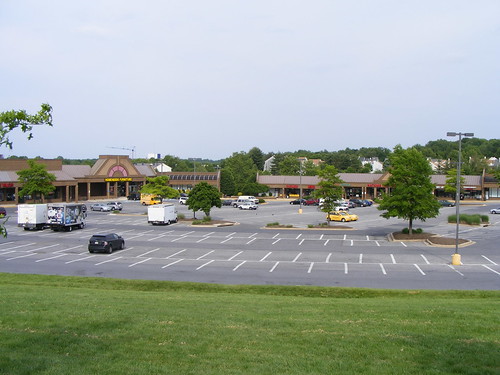
Empty Parking Lot, Olney Town Center


Meanwhile, I'd continue to discover Wheaton outside the mall. There was Barry's Magic Shop and an antique toy store that specialized in trains. There was House of Cards, a baseball card store, and Nick’s Diner, which only served breakfast and lunch. There was a military surplus store where I bought most of the patches that were sewn on my jacket. And there were not one, but two music stores where I would stare enviously at guitars and drum sets.

It didn't sink in that these were independent businesses, the kind that didn't care if a kid with a ponytail would come in and poke around despite being unable to make a purchase more often than not. Shopkeepers in the mall always eyeballed me as if I were going to steal something. But the best part about them, the part that wouldn't hit me until much later, was how accessible they were. I didn't need a car, money, or an agenda. I could just be there and fit in. Had Wheaton gone all Starbucks and Panera back then, I don't know how I would have made it through high school.

My girlfriend's father, a prominent local banker, forbade us to go to Legends, insisting we instead played pool at the billiard room in their house. Wheaton was just too dangerous for him. It was bad enough his daughter was dating a kid who in middle school hung out with his Salvadorian, Ivorian, and Cambodian friends in the garden apartments of Langley Park.

But for my part, I didn't drink, I didn't do drugs, and I didn't even smoke. I wasn't in a gang, I didn't get into fights, and I wasn't vandalizing. I didn't go to edgy venues looking for mischief. I just liked the fact that there was a place for me to be, and in Wheaton I felt like I fit in pretty well.
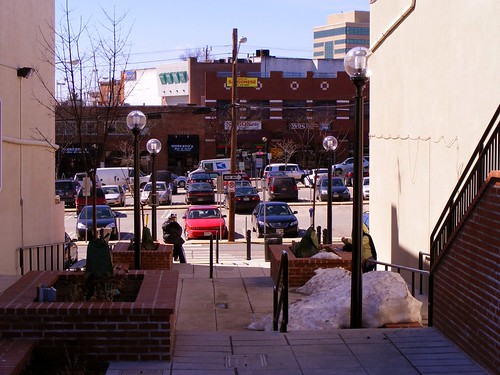
Wheaton Walkway


I liked walking around. I liked being recognized and treated like a member of a community. I liked that the businesses welcomed me. I liked recommending these places to my friends who might actually buy something. And it made going to the bus station after school an interesting adventure, not a walk of shame for that poor kid whose parents hadn’t bought him a car yet.

I’m thirty now, and I don't go to Wheaton very often anymore. More often I find myself in downtown Silver Spring or Bethesda. As much as Wheaton shaped who I am and how much I appreciate a sense of place, it just reminds me of high school too much, and I wasn’t very fond of my high school. Phantasmagoria closed its doors for good in 2001. Legends is still there, though it's been nine years since I last set foot inside. Many of the other small, independent shops have either gone dark or moved.

But Wheaton still has a bit of that feral urbanism, set of raw streets with not-so-mainstream shops and businesses that feel a little off the beaten path despite the fact that they’re right in the middle of everything, versus the tame, boring set of chains in strip malls that litter much of the suburbs. As wave after wave of investment pours into the choice real estate around Wheaton Metro, I can only hope that the edgy underground Wheaton I grew up with can survive and thrive.
Friday, May 21, 2010

what's up the pike: better see y'all tomorrow

Skaters At Commerce & Old Georgetown, Bethesda
- If you're coming to tomorrow's Fenton Street Market, please stop by the Silver Spring Charrette table, where seven local architects and myself will be there to help you envision our community's future. The charrette runs from 10am to 2pm, and the market from 9am to 3pm, in the parking lot at Fenton Street and Silver Spring Avenue.

- Also tomorrow: the second-annual Silver Spring Blues Festival, headlined by legendary D.C. blues group The Nighthawks - featured on HBO's The Wire - takes over Ellsworth Drive from 2pm on.

- The Handmade Mart returns to Downtown Silver Spring this Sunday. The "annual, juried, independent craft fair" takes over the block of Ellsworth Drive between Georgia Avenue and Fenton Street from 10am to 5pm. Check out this guest post about last year's Handmade Mart from friend of JUTP (and County Council candidate) Hans Riemer.

- Kensington Arts Theatre's production of the musical Violet (which we reviewed earlier this week ends its four-week run tonight at 8pm, with one last performance tomorrow at 8pm. As always, you can find them in the Kensington Town Hall, located at 3710 Mitchell Street in Kensington. For more info and to buy tickets, check out katonline.org.

AND:

- Rockville Central wonders if the InterCounty Connector, set to open next year, could help or hurt property values along the highway.

- MPW says we're the #2 local blog in Maryland.

Wednesday, April 28, 2010

what's up the pike: today's number is 287

- From the listservs: the Chelsea School, a small private institution on Pershing Drive near Downtown Silver Spring, may have shelved plans to build a library on their campus designed by starchitect Daniel Libeskind due to a lack of funding. The school's plans to build 75 condos on the land instead came up at a recent meeting of the neighboring Seven Oaks-Evanswood Citizens' Association. The school's website for the library project has a picture of Libeskind but no mention or images of the library.

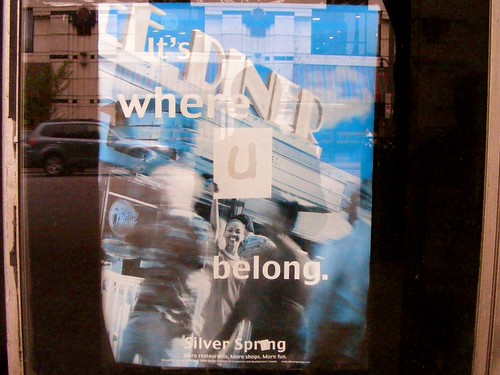
Where 'U' Belong

- Remember this? Double points if you can tell me where you'll find this 2004-vintage "Silver SprUng" sign. (It's in a pretty prominent place, so don't make fun of me if it's obvious to you.)

- Good Eatin' in Wheaton finishes what I started and explores Peruvian food in Wheaton, to many the epicenter of the pollo a la brasa phenomenon. Since he can write better about food than me, I might just outsource the rest of our Great Peruvian Taste Test to him.

- Eric Luedtke - Burtonsville resident, middle-school teacher, member of the East County Citizens Advisory Board - is running for state delegate in District 14, says Maryland Politics Watch. With two seats open, the district - which includes everything from Burtonsville to Damascus - could be one of the year's most interesting races, MPW's Adam says. Check out Eric's guest blog from last fall on the need to revitalize the Burtonsville village center.

- When JUTP attempted to post flyers in local stores two summers ago, Dawn Spencer - owner of gift shop Patches in Colesville at New Hampshire Avenue and Randolph Road - was one of the few who offered me a patch of her window, despite not being totally clear what a "blog" was. Like many local retailers, she's losing business, but friends and customers threw a fundraiser last weekend to keep the shop open, says the WaPo's John Kelly.

(He and I had the same journalism teacher, 25 years apart; I remember being assigned to read his high school columns, which were - IMO - much funnier than anything he's produced since. Today's title is a reference to one of them, which of course makes no sense to you unless you read the Rockville High School paper in 1981.)

Friday, March 19, 2010

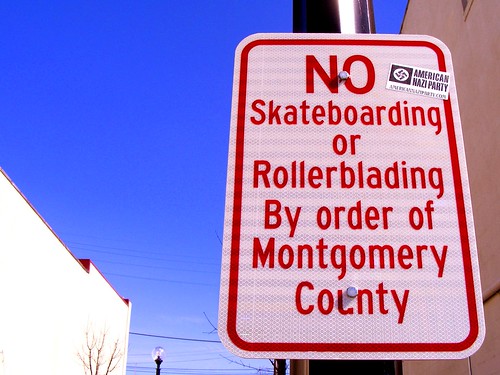
what's up the pike: do people even rollerblade anymore?

No Skateboarding

- Rita's Italian Ice is celebrating the start of their 2010 season by giving away free italian ice on Saturday from 12 to 10pm. The Burtonsville Rita's is onRoute 198, but they also have locations in College Park, Olney, and Aspen Hill.

- You've probably already heard that there'll be a meeting to discuss the new Silver Spring Civic Building, which after years of anticipation will finally open this July. The meeting will be next Tuesday, March 23 from 7 to 9pm at the Discovery Building.

- Costco's still thinking about opening up in Wheaton . . . Wheaton, Illinois, also known as Bizarro Wheaton or the Other, White Wheaton. Of course, the arguments for and against the big-box store coming to Wheaton, IL are the same as they are here.

For: "the Costco representative said a store would create about 300 jobs and, after three or four years, generate as much as $3 million annually in sales tax revenue for the city. 'The Costco thing has a lot of potential once you start to think about it,' [Bizarro Wheaton Official] said.

Against: "We've got a residential neighborhood right next door," [Other Bizarro Wheaton Official] said. "So it is a fairly incompatible use. I really respect the neighborhoods, and I don't want to do anything to damage them."

- It looks like Greg Sanders, son of recently-departed transit activist Harry Sanders, is following in his dad's footsteps with a blog post dismantling the libertarian argument that we have so much "suburban sprawl" because duh, everyone wants to live there. Greg's response (for those uninterested in planner-geekery): Downtown Silver Spring.

- Maryland state legislators are mulling a bill that would provide loans to people seeking to improve the energy efficiency of their home or business. Lisa Piccinini from UMD for Clean Energy - whose Matt Dernoga we interviewed last fall - writes a guest post about the program, and its implications for our environment, on Rethink College Park.

Friday, February 12, 2010

what's up the pike: living room, dining room

Civic Building, Feb. 2010 (5)

Well, it looks like we're cleaning up after Unusually Large Snowstorm just in time for the weekend. Not only are the federal government and county government open today, but the Red Line is running, as are some or all of the J, Q, S and Z Metrobus lines through Downtown Silver Spring and parts of East County. We're not even going to have snow for a few days! Awesome!

Anyway:

- Reemberto Rodriguez, director of the Silver Spring Regional Services Center, calls the new Civic Building, set to open July 1, "our community’s living room and patio." Read his whole description. We haven't gotten this poetic about public buildings in decades. I do wish my living room had an ice rink, though.

- The Gazette reviews Negril, a Jamaican restaurant in Silver Spring. Hooray for Caribbean food! If you're really jonesin' for it, though, I'd venture to Takoma Park for the Caribbean Market. Ethnic food guru Tyler Cowen recommends Caribbean Palace on New Hampshire Avenue, which means it is probably more authentic than what my mother ate growing up in Guyana.

- Montgomery College could open a satellite campus at the soon-to-be-former Giant in the Burtonsville Crossing shopping center. The supermarket will move across the street to Burtonsville Town Square and can dictate what stores can replace it. Another potential site is at the East County Center for Science and Technology planned for Calverton.

- Adam Pagnucco at Maryland Politics Watch went to Cleveland and came back raving about their HealthLine, a new bus rapid transit line connecting many of the city's major attractions. Back in 2008, JUTP featured a guest blog on the HealthLine from Cleveland native (and current District 18 delegate) Al Carr.

- Whatever happened to the Great Peruvian Taste Test? Well, three feet of snow didn't help. We'll get back on it next week.

Wednesday, October 21, 2009

guest blog: a future for burtonsville

The following is a response to Monday's post "of course burtonsville's settling" from Eric Luedtke, schoolteacher and member of the East County Citizens Advisory Board. He argues that it's time to stop casting blame and find a way to save Burtonsville's dying village center. As I am guilty of some name-calling myself, I appreciate his call to move forward.

Eric Luedtke Gets Interviewed
Luedtke at last year's Burtonsville Day.

Burtonsville needs help. That’s the one thing that pretty much everyone in the east county can agree on. Our central business district consists of row upon row of aging, decrepit strip malls. One of our two biggest shopping centers has something like eight empty storefronts, and is about to lose its anchor store. Much of the office space is empty. Property values are stagnating.

I’m glad Dan weighed in with his opinion about economic development in Burtonsville; it’s a debate that needs to happen and both the media and the county’s political establishment have been paying too little attention. But we need start the discussion from a constructive place, and too often those who have engaged in this conversation over the last few years have simply been re-enacting past debates and trying to find ways to place blame. It’s the NIMBY’s. It’s the developers. We could have done better. We could have had a real CBD, a walkable community, if only those guys over there hadn’t screwed everything up.

We need to start from where we agree, and where we agree is that Burtonsville needs help. Casting blame accomplishes nothing, especially since it prevents the community from presenting the sort of united voice that we’re going to need if we want to revive Burtonsville. Here are some of my thoughts on what we should be working on, that I think we might be able to share regardless of where we lie on the debate (any-growth vs. smart growth or anti-growth vs. pro-growth depending on one’s point of view) :

1. One Vocal Councilmember is Not Enough: Nancy Navarro, like both of the Praisners before her, is proving to be vocal in her advocacy for the Burtonsville area. But if the last few years have shown us anything, it’s that one voice is not enough. We need the politicians to fight for us, and because politicians are what they are, the only way they’ll do that is if we make them. People downcounty do that very effectively, which is why so many of our elected leaders seem to think the county starts at the DC line and ends at Randolph Road.

The Burtonsville community needs to be more vocal, and unfortunately we don’t have an institution to do that. No city council like Rockville. No chamber of commerce like Germantown. No civic umbrella like GOCA in Olney. The closest thing we have, the East County Citizens Advisory Board, is hamstrung by county rules. Unless and until we have a real organizational advocate that can make more politicians listen, even those who live here will have no real reason not to ignore us.

2. It’s Time to Reopen the Master Plan: The Fairland Master Plan is simply not meeting the needs of the community. Master Plans are meant to give an overall vision to the development of a community. Our current master plan, regardless of how one felt about it in 1997, has been so diluted with ZTAs and special exceptions, so undercut by economic realities, that there is little left of any cohesive vision.

The only thing preventing this is the budget reality that planning takes money, and the powers that be have a specific order to go in. I find that, frankly, a little ridiculous. I have a friend who’s an ER nurse. When two patients come in, one with a heart attack, one with a broken thumb, she isn’t rushing to the side of the guy with a broken thumb. For planners to ignore the need for a Fairland rewrite while working on plans for parts of the county which are already economically successful is ridiculous.

3. We Need to Start From Scratch: And I mean from scratch. Start from a blank slate, and a single question: What do we want Burtonsville to look like in twenty years? That allows us to look at all sorts of options. Slowing traffic through the CBD. Redeveloping the entire shopping center that the Giant is leaving, since its economic viability is questionable anyway. Working out a deal with the property owners west of Seibel’s to try to get something better out of that stretch of road than strip malls. History is important – and I’m a history teacher so you know I really believe that. But if we let the debate about our future to continue being dominated by debates long past, we will accomplish nothing.

4. It’s Time to Stop Attacking Each Other: There’s nothing to be gained from calling each other names in the paper. It might help the Gazette’s circulation some, but it does absolutely nothing for our community. No matter how hard it may be sometimes, the key to effectively solving our problems is this: assume that the person on the other side of the table is acting in good faith.

Eric Luedtke

If you've got something to say about East County, say it here! Leave a comment or send your thoughts to justupthepike at gmail dot com.

Thursday, October 15, 2009

guest blog: proposed changes to Q2 bus hurt downcounty riders

Waiting For A Bus, Wayne at Dixon
On Tuesday, WMATA held a public hearing to discuss changes to the Metrobus Q2 line between Silver Spring and Shady Grove. Kathy Jentz, East Silver Spring resident and frequent Q2 customer, testified at the meeting. In this guest blog, she argues that the reconfigured line will reduce service in the Downcounty, where ridership is the highest.

Tuesday night was a hearing at First Baptist Church in Wheaton to explain how WMATA is "breaking" the Q2 into two segments starting late this December and to get the public's feedback. "Breaking" being the operative word, as the proposed "improvements" will do nothing to alleviate the current line problems but could do much to worsen it. Unfortunately, only two bus riders including myself testified at the hearing. We were outnumbered ten-to-one by WMATA staff and other area transit employees. If you would like to comment (and I very much urge you to do so), you may send an email by 5pm Friday, October 16 to WMATA's public outreach contact.

The Q2 currently runs twelve miles from Shady Grove to Silver Spring, passing through Wheaton and Rockville along Georgia Avenue, Veirs Mill Road, and Rockville Pike. It carries 10,200 riders a day and is one of the most heavily used bus lines in the region. The segment between Silver Spring to Wheaton carries over 50% of those Q2 riders. In the new proposal, there will be a Q2A bus that runs from Shady Grove to Wheaton and a Q2B bus from Rockville to Silver Spring, allowing the Veirs Mill section between Wheaton and Rockville to be served most frequently.

One of the problems many Q2 riders pointed out at previous meetings was the detour into the Rockville campus of Montgomery College, which was often totally unnecessary when the campus is closed. That remains as part of the QA route with a minor adjustment to switch campus entrances that will save mere seconds off the bus route. They are also looking into saving time at Shady Grove, Rockville, and Wheaton metro stations by reconfiguring how the buses enter and exit them.

I'd suggest they more clearly mark which buses are going in which direction as most delays I experience are the bus drivers repeatedly telling illiterate riders "Shady Grove" or "Silver Spring" as they block others from boarding. I can only imagine how this will play out on the overlapping Q2A/Q2B lines along Veirs Mill with the poor driver having to explain to folks not only the destination but if they are not going all the way as well.

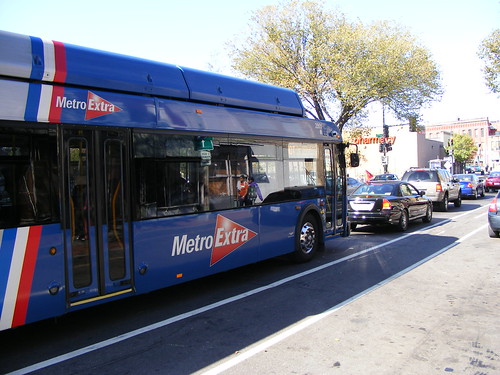
MetroExtra Bus Headed Towards Silver Spring
WMATA officials say express service along the Q2 route, like this MetroExtra bus on Georgia Avenue in the District, has been postponed indefinitely.

A Q9 Express version of the Q2 line was requested by many of the attendees at past Q2 meetings as the logical solution to the current bus-bunching and schedule problems. I was informed by WMATA & Ride-On staff after the meeting that the Express line "just missed funding" in the current budget by a tiny margain and has been shelved for now. Just as well, as it only went from Shady Grove to Wheaton, inexplicably leaving off the most traveled section of the Q2 line from the Wheaton to Silver Spring stations. When I asked why the Express was not including this segment, I was given no explanation or reason.

One official later said that "we hoped this would steer more folks to take the Red line" for that portion. He was not joking. So those of us who want to get upcounty from downcounty are not only forced to transfer between multiple buses, but also between Metro and back and to also then to pay the 3-5x price increase for using rail for a portion of our travels.

No mention at all was made of the Y line buses that run north-south on Georgia Avenue and whether they will be increased to absorb this excess passenger load shifted to them by the planned decrease in Q2 service from Silver Spring to Wheaton. When I brought this up in my testimony the officials present looked surprised. The fact is when a Y bus runs late (which is often), the Q2 takes on all those extra passengers and then the bottleneck shifts to the Q2. This is the domino effect that is choking both bus lines. A Georgia Avenue express bus on the Y line, say from Silver Spring to Glenmont, would greatly relieve that pressure on both lines now and would be the ideal solution to most of all of the Q2 bus bunching as well as the Y bus schedule problems.

Kathy Jentz is editor and publisher of Washington Gardener magazine and can be reached at WGardenermag at aol dot com. If you've got something to say about East County, say it here! Send any contributions to justupthepike at gmail dot com.

Thursday, August 6, 2009

guest blog: chevy chase on the purple line

The following is a guest blog by Pat Burda, Chevy Chase Town Councilmember, in response to a guest post JUTP ran last week by Jon Prater-Lewis of North Chevy Chase. Prater-Lewis lives on Jones Bridge Road - a proposed alignment for the Purple Line that the MTA rejected in favor of one running through the adjacent Town of Chevy Chase along the Capital Crescent Trail.

JUTP encourages anyone to submit guest posts, even on topics we don't agree on. (See our disclaimer below.) Send your thoughts to justupthepike at gmail dot com.

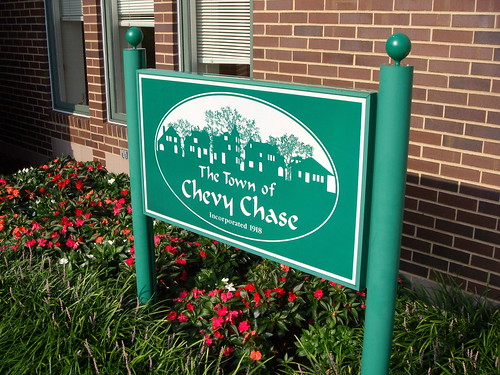
Chevy Chase Sign


On behalf of the Town of Chevy Chase, I appreciate the chance to respond to Mr. Prater-Lewis’s recent posting. I, and all Town Councilmembers, welcome any opportunity to debate the facts or merits of the Purple Line project. It is unfortunate that Mr. Prater-Lewis felt the need to go too far with many of his accusations and particularly of his characterizations of the Town.

Let me be perfectly clear, the Town of Chevy Chase feels strongly about providing a Purple Line east-west connection for all the reasons other supporters of the Purple Line do. Yet, we feel equally as strong about saving the trail. The fact of the matter is that the right of way behind the town and adjacent to the communities of East Bethesda and Edgevale is so narrow (narrower than most other locations) that the all mature trees will be clear cut (and cannot be replanted due to catenary wire and track issues), construction will require the removal of trees outside the right of way on private property, the trail itself will be narrower here than elsewhere unless private property is taken, and trains will be running at 35-50 mph within 7-10 feet of trail users. The pretty MTA-generated pictures folks have seen do not reflect the right of way behind the town. In fact, the one posted on JUTP of “the Purple Line in Chevy Chase” shows trains running through Columbia Country Club where the right of way is 34 feet wider and the terrain is flatter.

We wanted help analyzing the state’s alternatives. When we hired them, we knew and appreciated that they were transit advocates. Being from New York, they brought a new eye to the discussion, and they immediately identified that two parallel conversations were taking place in our region: BRAC’s relocation of Walter Reed to Navy Medical with a projected 4,000 new trips per day to the facility and the Purple Line which at a proposed $1.68 billion was planned to miss that site altogether.

As they looked more closely at the state’s Purple Line alternatives, they saw that there actually was one on the table that could kill the two birds with one stone, but it quickly became clear to them that something was amiss in the analysis of that option: the Jones Bridge Road bus rapid transit line as proposed by the state ran slower than the current buses along Jones Bridge Road. The more they looked, the more problems they found in the state’s analysis. Therefore the town asked the State to take a harder look at that alternative and to optimize its potential so that the greater community could evaluate its potential fairly.

so much more AFTER THE JUMP . . .

Yes, the Jones Bridge Road alternative was added to the Purple Line alternatives years ago under Governor Ehrlich’s direction; I, too, have heard he did so in order to appease Columbia Country Club. And, it probably would have died a natural death except for the rather significant BRAC issue that dramatically changed the equation. The BRAC DEIS itself states that traffic on Jones Mill Road between Connecticut Avenue and East West Highway will increase 15-17% due to the relocation. That is east-west traffic, not north-south as Mr. Prater-Lewis suggests all the increased BRAC traffic will be.

We all feel for the people on Jones Bridge Road – they are frankly between a rock and a hard place. Something has to change on that street to accommodate what is coming. Yet, when Mr. Prater-Lewis chastises the Town for suggesting that transit is needed on his “quiet residential neighborhood” street, he needs to be more up front: Jones Bridge Road has morphed over the years into a heavily trafficked four-lane road that is a major cut-through to the Beltway and over into Bethesda from East-West Highway. He notes that it has already reached “maximum sustainable levels.”

Others have criticized the Town because “you can’t put bus rapid transit on such a heavily used road.” But, isn’t that exactly the point of transit – provide a good transit alternative and you’ll get people out of their cars? If bus rapid transit can work in mid-town Manhattan, I am perplexed as to why it cannot work on Jones Bridge Road. For that matter, if bus rapid transit or light rail can work on Wayne Avenue in Silver Spring, why can’t it work on Jones Bridge Road? The fact of the matter is, it probably can . . . but we’ll never know because the state refuses to give it a fair analysis.

Mr. Prater-Lewis suggests that “scores of homes would have to be pulled down” in order to accommodate the bus rapid transit. SSE shows that not only will no homes have to be removed, but any widening would not have to go beyond the sidewalks in the already-owned state right of way. Unfortunately, in not embracing a transit alternative for that area, the state has recently recommended condemning six houses in Mr. Prater-Lewis’s community.

It is frankly outrageous to suggest that we think our school children are more important than those that live in the North Chevy Chase community and that we are “indifferent” to the threat to the safety of “their” children. Of course we want all children to be safe. I’m sure it is a constant worry now to parents who live along Jones Bridge Road that their children have to traverse this busy four-lane road at morning rush hour in order to get to school. Again, though, without providing a transit alternative, there will be approximately 125 more cars in front of the school between 8:15 and 9:15 each morning according to the BRAC DEIS calculations. In fact, the state has already floated widening the road in front of the school to accommodate those cars. It seems the neighborhood has fought that off for the moment, and rightly so. It is a bad idea.

BRT would reduce the number of cars in front of the school, is safely used near schools in other cities and locations, would not run any faster than current speed limit, and would abide by any traffic precautions. Not so, however, the light rail on the narrow right of way into Bethesda that runs within several feet of homes, backyards, a community park, and even a day care playground. Students walking from the town to Bethesda-Chevy Chase High School or Our Lady of Lourdes will be expected to cross the trail at-grade, often in the morning darkness, with trains running at high speeds on the open right of way (the light rail needs to make up time here that it loses in Silver Spring). We’ve seen the state’s drawings . . . there are no precautions for crossings on this section of the right of way. Again, we want all children to be safe, including our own.

Unlike what Mr. Prater-Lewis said in his letter, the National Naval Medical Center did not oppose BRT on Jones Bridge Road. It did, however, raise many questions for the state, including how the state came up with such a low number of potential riders for a transit line to that location. The fact of the matter is that the state relied on old MCOG projections that did not include adjustments for the upcoming BRAC realignment. This is just one of the issues raised by the town in our public comments. And, the town has said that with a single employer of such significance at NNMC and NIH – the federal government, you’d have even greater opportunities to provide incentives for employees to use a transit for commuting than with the multiple small disparate businesses in Bethesda.

The town has not paid for any lobbyists or public relations help – maybe we should have because it certainly worked for Purple Line Now! The real benefit of their lobbying, however, goes not to communities but to developers like the Chevy Chase Land Company. Thanks to them, we’re spending a billion more of taxpayer’s money than we have to in order to raise the value of CCLC’s Chevy Chase Lake property by hundreds of millions. Thanks to them, we’ll also be putting more traffic on Connecticut Avenue near that development making commutes for people north of Chevy Chase far worse while they get to pay for it with a hiked gas tax. (Fun fact: the former president of Chevy Chase Land Company and founder of Purple Line Now!, Ed Asher, is a neighbor of Mr. Prater-Lewis in his “less affluent” community.)

We truly believe that BRT on Jones Bridge Road will help alleviate problems, not exacerbate them. And, we see clear benefits to the entire region by supporting a cheaper bus rapid transit Purple Line that could allow easy linkages to Councilmember Elrich’s proposed system in the County, MCOG’s Transportation Planning Board’s metropolitan area proposal, and we can dream, a Corridor Cities Transitway. If the state decides to push hard to fund the expensive light rail, there will be no money left for these other important projects. Do we really want to spend all our transit money on just the Purple Line, an orphan line at that?

And, finally, I have to address the issue of political donations. Chevy Chase Land Company worked so hard and, I have to give it to them, effectively over the years to build political support. Does anyone really think that they, and other developers, didn’t support any political campaigns in this area? So, if by “overwhelming public support” for light rail Mr. Prater-Lewis means elected officials in this area, he’s probably right. If he means developer and business interests, he’s again right. If he means residents in the Bethesda-Chevy Chase area, he is flat wrong, and the public record shows it.

Let’s face it, NIMBYism can be applied to this project in many instances, and yes, to the town which loves its trail. But it can also be applied to the founder of the Action Committee for Transit who told me he started the light rail movement for the Purple Line 20 years ago because he didn’t want buses running next to his house in Silver Spring and to Mr. Prater-Lewis who doesn’t want transit near his home which is adjacent to Jones Bridge Road. Yet, it is not NIMBYism to try to save the state $1 billion, get cars off the road throughout the region, and save an important urban greenspace – the most popular trail in Maryland – from environmental destruction.

I’m sorry this letter is so lengthy, but Mr. Prater-Lewis’s accusations and distortions could not go unanswered. And, I hope I have explained more clearly the town’s concerns and frankly, our frustrations. The Town Council has not yet decided what next steps, if any, we’ll be taking. We do not take any of this lightly.

Pat Burda, Councilmember, Town of Chevy Chase

Disclaimer: the statements above are those of Pat Burda and belong to her alone. I am an aide to Councilmember George Leventhal, an ex-officio board member of Purple Line Now!, a group advocating the project's completion.

Monday, August 3, 2009

guest blog: a jones bridge road resident's view of the purple line

The following post comes from Jon Prater-Lewis, a North Chevy Chase resident who lives on Jones Bridge Road, one of the proposed alignments for the Purple Line, a transitway that would connect Bethesda to New Carrollton. An alternative route along the Capital Crescent Trail would pass through the Town of Chevy Chase, which may file a lawsuit against the Maryland Transit Administration that could stall the project entirely.

purple line at columbia country club
A rendering of the Purple Line in Chevy Chase, courtesy of MTA.

It has been several years since former Governor Ehrlich made the statement that 'under no circumstances' would the proposed Purple Line cross Columbia Country Club, even as the Maryland Transit Administration was supposedly undertaking an impartial study of precisely that route. The resulting interference by Governor Ehrlich produced the so-called Jones Bridge Road option, in which the MTA was required to study the possibility of the Purple Line being diverted onto Jones Bridge Road in the form of a Bus Rapid Transit system, in order to bypass the Country Club's golf course. Coincidentally, many of the Country Club's members were supporters of Governor Ehrlich's campaign.

Years, many millions of dollars, and a new governor later, a light rail version of the Purple Line running from New Carrollton to Bethesda along the former CSX railroad right of way now known as the Capital Crescent Trail has emerged as the preferred option. It has been unanimously approved by Montgomery County Council, which bought the CSX route for millions of dollars in order to build a light rail on it. It has been selected as the preferred option by the Planning Board and endorsed by the Washington Post. The MTA's own lengthy public forums on the subject have produced overwhelming public support for the light rail, and soon Governor O'Malley is expected to make his choice on whether to formally approve it. Federal funding is expected to follow.

It is at this eleventh hour that the Country Club, as well as the Town of Chevy Chase, are spending inordinate amounts of money lobbying to have the Purple Line derailed, and the Jones Bridge Road bus option revisited. The Country Club objects to the presence of any form of public transportation encroaching on its exclusive preserve, where memberships exceed $70,000, even though it does not actually own the land on which the Purple Line would run. The Town of Chevy Chase does not want vulgar public transportation skirting the northern boundaries of its million dollar homes, and recently paid hundreds of thousands of dollars to an engineer from New York, named Sam Schwartz, to prepare an alternative study claiming that it would be far better to divert it onto less affluent Jones Bridge Road.

Last year, the Schwartz study was largely discounted by the MTA, which described portions of it as misinformation, and recently some residents of the Town of Chevy Chase have begun questioning the large sums of money paid to Mr. Schwartz.

The Bus Rapid Transit option has also been opposed by the US Navy Hospital, which sits at the end of Jones Bridge Road and is soon to become the new Walter Reed Military Medical Center. With traffic congestion expected to increase as a result, it does not want the Purple Line compounding the problem, although the Schwartz study claims it would lessen it. The Schwartz study claims that commuters to Walter Reed would ride the Purple Line, but BRAC studies suggest that most commuters to Walter Reed would drive their cars to Walter Reed from the Beltway exits on Rockville Pike and Connecticut Avenue, where the increased traffic stream would collide with the Purple Line if it were diverted onto Jones Bridge.

In fact, it is difficult to imagine anything lessening the congestion that now affects Jones Bridge Road, especially where it crosses Connecticut Avenue, and where waiting through two or more lights at rush hour is the norm. If the Purple Line were built as a Bus Rapid Transit system there, it might as well be renamed the Gridlock Express.

The worst impact to Jones Bridge Road would be at it opposite end, where it is a two lane road passing through a quiet residential community, with North Chevy Chase Elementary School situated on one side, and the National Audubon Society on nearby Jones Mill Road. I have lived on this part of Jones Bridge Road for 33 years, during which time commuter traffic has already reached maximum sustainable levels. To the residents here, the campaign by the Country Club and Town of Chevy Chase to divert the Purple Line onto Jones Bridge has been, at best, a callous exercise in class warfare and, at worst, an indifferent threat to the safety of children. Many live within walking distance of the school, and cross Jones Bridge Road to attend it. Despite claims made by Mr. Schwartz that high speed buses could co-exist with existing traffic and navigate a two lane road without the need to widen it, it is clear that scores of homes would have to be pulled down and dedicated lanes would need to be built. And the danger to children crossing the path of high speed buses passing every few minutes would remain.

The issue became acute when the Town of Chevy Chase voted to limit traffic and reduce speed in front of its own elementary school, where coincidentally the mayor's children attended. The double standard it represented provoke outrage in the North Chevy Chase community. It has become a test for both the citizens of Montgomery County and the State of Maryland whether a much-needed commuter rail system carrying thousands of passengers along a publicly owned right of way can be diverted into a quiet residential neighborhood as a speeding bus line, and made to pass in front of a school, merely in order not to disturb millionaires at their golf game.

And the questions arises why, when the Maryland Transit Administration has vetted the entire process in open forum, and elected officials have endorsed it, private money spent on lobbyists has any expectation at all of circumventing the process?

For many decades, large, heavy CSX freight trains ran across Columbia Country Club and the northern edge of the Town of Chevy Chase without harm. Now this publicly owned right of way is being considered for a smaller light rail running on quiet grass tracks, which will bypass most congested roads and avoid the area of North Chevy Chase Elementary School altogether. The choice is obvious. The time has come to move forward with the Purple Line as a light rail on the Capital Crescent Trail, and end the corrupting effect of private big money on the legislative and planning process. Is that not what Governor O'Malley was elected to do?

Disclaimer: the statements above are those of Jon Prater-Lewis and belong to him alone. I am an aide to Councilmember George Leventhal, an ex-officio board member of Purple Line Now!, a group advocating the project's completion.

Tuesday, July 28, 2009

sligo creek golf course meeting tonight

The following is a submission from North Woodside resident Woody Brosnan about a meeting tonight for proposed changes to the Sligo Creek Golf Course. If you've got something you'd like to say, write a guest blog! Send submissions to justupthepike at gmail dot com.

WHO:
Neighbors, Golfers, and Environmentalists

WHAT:
* Share your understanding of why Rockville wants to close Sligo forever on October 1st.
* What are our alternatives?
* Come and find out what we as citizens can do.

WHEN:
Tuesday, July 28th @ 6:00 pm

WHERE:
Sligo Creek Golf Course Clubhouse
9701 Sligo Creek Parkway, Silver Spring, MD

WHY:
Because only the citizens can fight to keep Sligo open for youth, seniors, persons with disabilities, persons of color, low and moderate income golfers, and everone else who loves this priceless course.

Please come out and join the fight!

Monday, July 20, 2009

guest blog: sligo creek golf course hearing recap

The Planning Board's hearing on what to do with the Sligo Creek Golf Course was pretty intense for those who dared to brave the three-hour affair last Thursday evening (which was also covered by your favorite Silver Spring bloggers.) North Woodside resident Woody Brosnan offers his perspective of what happened. If you've got something you'd like to say, write a guest blog! Send submissions to justupthepike at gmail dot com.

It was a very up and down night at the Montgomery County planning board Thursday night. I guess we probably got some kind of signal when Chairman Royce Hanson and member John Robinson kept the standing-room only crowd waiting for 15 minutes past the scheduled 7 p.m. start time. Hanson indicated his intent was to get through the 39 witnesses as quickly as possible.

I thought on the positive side we had some great testimony from golfers who wanted to keep the course going, including seniors, women, fathers, mothers. I also think there was general agreement that we want a more environmentally-friendly golf course. One man offered to contribute $1,000 to a loan fund to improve the course. The audience frequently broke into applause.

There were two witnesses for a soccer complex and two for disc golf. The remaining witnesses favored a nature center. One or two people said that if there can't be golf that they would like to see some recreation at the site. Only a couple of times did board members ask questions of the witnesses.

After 10 p.m., the board members had their turn and it was clear that Hanson and Robinson wanted no more hearings where they would have to listen to pleas for a golf course. Hanson first dismissed the soccer/sports complex, saying it was too much for that area. (This would have been the worst option from a traffic standpoint.) Then, Robinson, who is only on the board because the Council extended his term, questioned why they should even consider a golf course option since they were prohibited from operating a golf course by the lease agreement with the Revenue Authority.

Mary Bradford, the parks staff director, explained that they wanted to "marker" in case there was a decision to keep the course open by the Council. So the staff was willing to do the work. Hanson wound up directing the staff to consider some kind of option for the course that would include natural areas with recreation. They did not specify what recreation but I think it was something less than lighted soccer or ball fields.

Golfers will now appeal directly to the County Council to keep the course open.

If you've got something you'd like to say, write a guest blog! Send submissions to justupthepike at gmail dot com. All statements published are those of the writers and theirs alone.